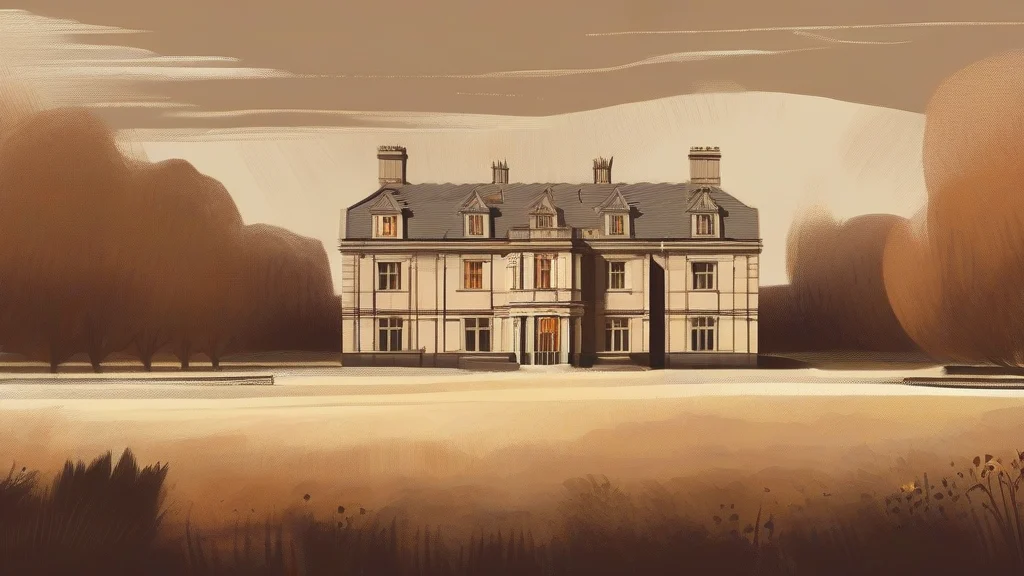
What does demesne mean?
A demesne (pronounced like "domain") is land held and used directly by its owner rather than being let out to tenants. In its primary sense, it is a term of feudal history: the demesne was the portion of a manor that the lord reserved for his own household, worked by peasants who owed him labor service as part of their obligations. This distinguished it from land granted out to tenants in exchange for rent or services. The word also survives in a broader, somewhat literary sense meaning one's own territory, sphere of control, or rightful province — as in treating a place as one's personal demesne. Because it belongs mainly to legal, historical, and academic writing, using it in everyday speech lends a deliberately formal or archaic flavor. Its shared origin with "domain" makes the connection between the two words easy to remember, even though they now occupy distinct niches in the language.
Land attached to a manor and retained by the owner — historically, the feudal lord — for their own use rather than granted out to tenants.
"The peasants were required to labor on the lord's demesne during harvest season."
Chiefly used in historical and legal contexts relating to feudal land tenure.
One's own territory, domain, or sphere of control, often used figuratively or for rhetorical effect.
"She guarded her kitchen as her personal demesne, tolerating no interference."
The plural follows the regular English pattern and is used mainly when discussing multiple estates or holdings.
"The abbey accumulated several demesnes across the county over two centuries."
"Demesne" is just "domain" wearing medieval armor — same Latin ancestor, but it survived only as a term for the land a feudal lord kept for himself.
Reviewed by Deb Chak, Editor. AI-assisted content curated by RJS Tech Solutions LLP.
Etymology of demesne
"Demesne" derives from Old French "demeine," from Medieval Latin "dominicus," meaning "of a lord," ultimately from Latin "dominus," meaning "lord" or "master." It entered English in the Middle Ages as a term of land tenure for the land a lord retained for his own use. It shares this Latin root with "domain," which developed along a parallel path through French, as well as with "dominion" and "dominate." Despite their divergent modern meanings, "demesne" and "domain" remain exact homophones in standard pronunciation.
How demesne is actually used
The word is largely confined to historical, legal, and academic registers — it appears most often in discussions of feudalism and land tenure, though writers sometimes use it playfully for emphasis when describing someone's personal turf. The pronunciation is identical to "domain" in most varieties of English.
Easily confused with demesne
"Domain" is the general modern word for an area of control or expertise, while "demesne" is a narrower legal and historical term for land directly held by its owner, particularly in feudal contexts.