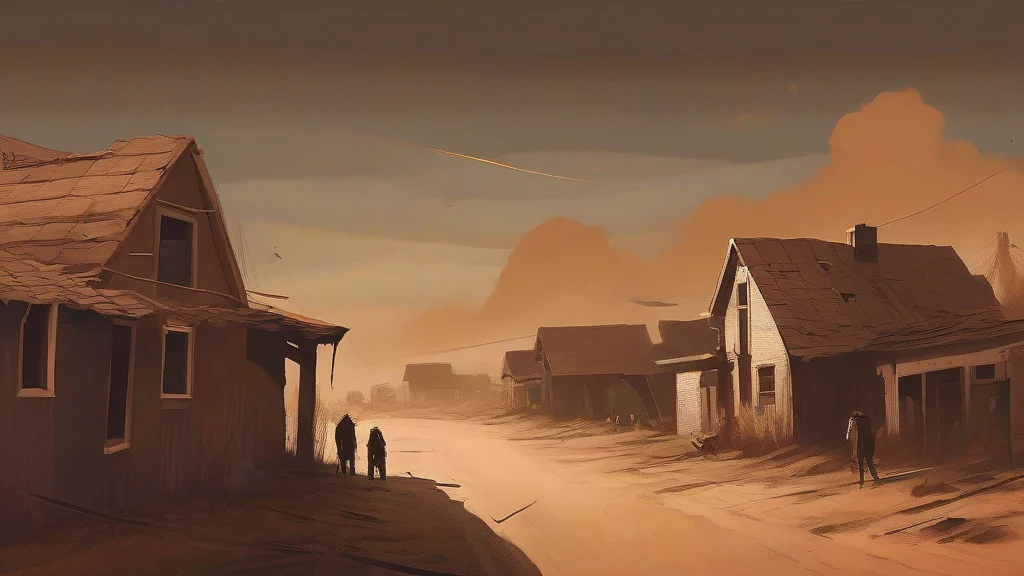
What does depopulate mean?
To depopulate is to bring about a major decline in the number of people living in a particular place. The verb is most often applied to regions, towns, or countries that have lost inhabitants through war, famine, disease, economic collapse, or sustained outward migration — as when rural communities are depopulated by young workers moving to cities. It can also describe deliberate acts, such as the forced removal of a civilian population. The word is largely formal in register and appears most frequently in historical, demographic, and journalistic contexts, where it is commonly modified by adverbs such as 'heavily' or 'largely'. Its noun form, 'depopulation', is equally common in academic and policy writing about shrinking communities. Because the word implies significant, often troubling loss rather than ordinary population change, it carries a weighty, serious tone and is rarely used casually or ironically.
verbTo substantially reduce the population of a place, especially by death, emigration, or displacement.
- To reduce the population of a region or place, typically through death, migration, or forced removal.
- (Rare, of disease or disaster) To cause a drastic reduction in numbers of people in an area.
"The Black Death depopulated entire villages across medieval Europe."
"Rural areas have been steadily depopulated as young people move to cities for work."
"The war depopulated the borderlands within a matter of months."
When the Black Death swept through 14th-century Europe, it didn't just kill people — it literally depopulated villages so completely that some were erased from maps forever.
Reviewed by Deb Chak, Editor. AI-assisted content curated by RJS Tech Solutions LLP.
Etymology of depopulate
Depopulate derives from Latin 'populus', meaning 'a people or nation'. The English verb was formed from the prefix 'de-' combined with 'populate', itself borrowed from Medieval Latin 'populatus', the past participle stem of 'populare', meaning 'to lay waste or ravage' but originally derived from 'populus'. The word entered English in the late 16th or early 17th century alongside other Latinate vocabulary that arrived during the period of scholarly borrowing. It shares its root with 'population', 'popular', 'populous', and ultimately with 'people', which entered English via Old French from the same Latin source.
Related word forms
How depopulate is actually used
Formal to semi-formal register; common in demographic, historical, and journalistic writing. Often used in the passive ('the region was depopulated') and frequently paired with adverbs like 'heavily', 'largely', or 'steadily' to convey degree. Carries a somewhat neutral-to-grave connotation depending on cause (economic decline vs. catastrophe).
Easily confused with depopulate
Depopulate refers specifically to reducing the number of inhabitants in an area, whereas displace means forcing individuals or groups to move from their home or position.