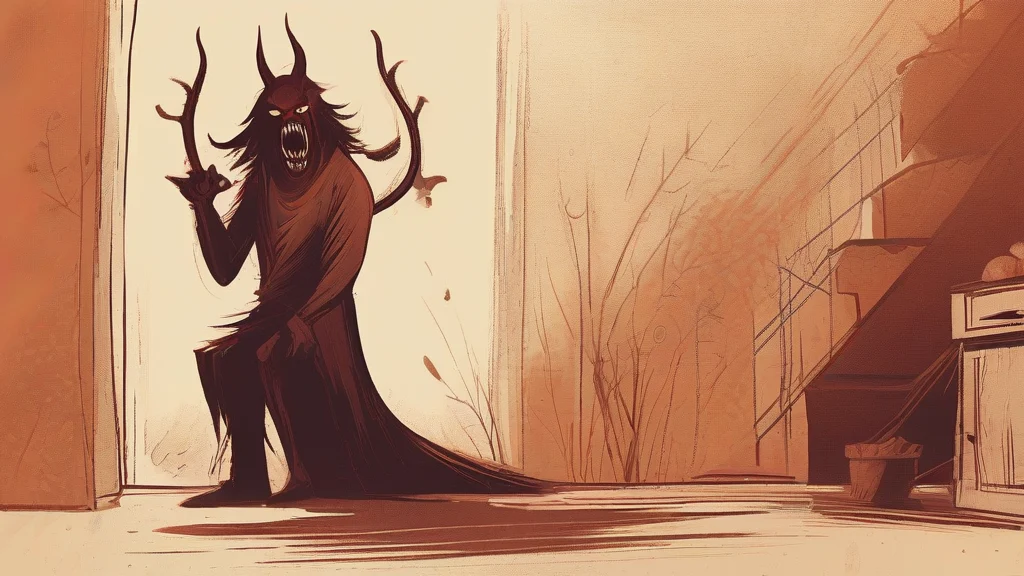
What does devilry mean?
Devilry is a noun denoting wicked or mischievous behaviour, ranging from playful roguishness to outright malevolence. In its lighter sense, it describes the pranks and high jinks of someone who cannot resist causing a little trouble — a child's devilry, say, or a prankster's antics. In its darker sense, it characterises acts of exceptional cruelty or malice as though they were the work of the devil himself. The word derives from 'devil' combined with the suffix '-ry', which forms nouns denoting a practice, condition, or collection of behaviour, much like 'knavery' or 'skulduggery'. It is largely literary and slightly old-fashioned in flavour, lending writing a vivid, slightly theatrical quality. Its synonyms range from 'mischief' to 'wickedness', reflecting that span between impish fun and genuine evil. Writers reach for it when a single word must capture both the spirit of troublemaking and its faintly demonic undertone.
nounWicked or mischievous behaviour, especially of a playful or malicious kind; also, wickedness or cruelty regarded as characteristic of the devil.
- Mischievous or playfully wicked behaviour; roguish pranks.
- Extreme wickedness or cruelty, as if inspired by the devil.
"The children's harmless devilry kept the whole household amused all afternoon."
"The pupils' devilry reached its peak on the last day of term."
"The novel's villain carries out his crimes with a devilry that chills the reader."
The plural is rare and literary, used when referring to multiple individual acts of mischief or wickedness.
"The memoir recounts the youthful devilries of the author and his cousins."
'Devilry' traces straight back to the Greek 'diabolos', which literally meant 'slanderer' — the devil was originally the great accuser before he was the great tempter.
Reviewed by Deb Chak, Editor. AI-assisted content curated by RJS Tech Solutions LLP.
Etymology of devilry
Devilry was formed in Middle English from 'devil' plus the noun-forming suffix '-ry'. The word 'devil' itself descends from Old English 'dēofol', borrowed ultimately from Latin 'diabolus', which came from Greek 'diabolos', meaning 'slanderer' or 'accuser'. The '-ry' suffix gives the word the same shape as older formations such as 'knavery' and 'robbery', indicating behaviour characteristic of a devil. Cognates sharing the same ultimate root include 'diabolical' and the French-derived 'diablerie'.
How devilry is actually used
The word is somewhat literary in register. When applied to people's behaviour it usually carries a wry, affectionate tone suggesting harmless troublemaking, but when applied to acts of violence or cruelty it takes on a genuinely sinister force.
Easily confused with devilry
Revelry means lively, noisy celebration and festivity, whereas devilry means wicked or mischievous behaviour.
Devilment refers specifically to playful mischief or high spirits, while devilry can also denote serious wickedness or demonic evil.