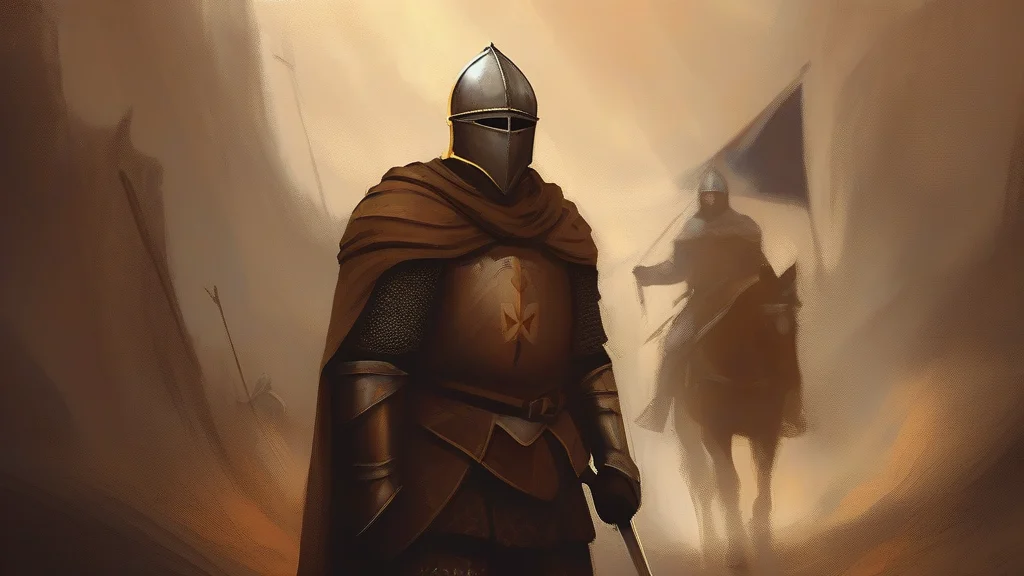
What does chivalry mean?
Chivalry denotes the idealized code of conduct followed by medieval knights, built around courage in battle, loyalty to one's lord, defence of the weak, honesty, and courtly manners toward women. Derived from the French chevalerie ('horsemanship', from chevalier, 'horseman'), the term reflects the fact that knights were defined by fighting on horseback. Over time the word broadened to describe any gallant, courteous, and honourable behaviour — particularly a man's considerate treatment of women — so that helping someone with a heavy load or giving up a seat can be called an act of chivalry. The word carries a strongly positive, somewhat nostalgic connotation, though modern speakers sometimes invoke it ironically or question whether such gender-based courtesies are outmoded. Common collocations include 'the code of chivalry', 'the age of chivalry', and the wry complaint that 'chivalry is dead'.
The medieval knightly system and code of conduct valuing bravery, honour, loyalty, and the protection of the weak.
"Tournaments were held to display feats of arms worthy of the code of chivalry."
In this sense the word is largely historical or literary, typically appearing with phrases like 'code of chivalry'.
Courteous, generous, and gallant behaviour, especially by men toward women.
"His quiet acts of chivalry — walking her home, offering his coat — won her over."
This is the dominant everyday sense today, often used in the set phrase 'chivalry is dead'.
Chivalry is almost always used as an uncountable noun; a plural form is rare and would appear only in academic writing contrasting different regional or historical codes of knightly conduct.
"Medieval historians have compared the differing chivalries of France and Iberia."
The word 'chivalry' literally comes from the French for 'horseman' — so every time you praise someone's chivalry, you're really calling them good with horses.
Reviewed by Deb Chak, Editor. AI-assisted content curated by RJS Tech Solutions LLP.
Etymology of chivalry
Chivalry comes from Old French chevalerie, meaning 'knighthood' or 'horsemanship', itself formed from chevalier ('knight, horseman'), which derives from Late Latin caballarius, from Latin caballus ('horse'). English adopted the word in the Middle Ages to describe both the institution of knighthood and the ethical code associated with it. It shares this horse-derived root with cavalry and cavalier, all pointing back to the image of the mounted warrior.
Related word forms
How chivalry is actually used
Chivalry is a formal or literary word in its medieval sense, but its extended sense of polite, protective behaviour appears readily in everyday speech. The phrase 'chivalry is dead' is a common lament about declining manners, often used half-jokingly. Modern usage sometimes carries connotations of outdated gender attitudes, so it can be used either approvingly or critically depending on context.
Easily confused with chivalry
Cavalry refers to soldiers who fight mounted on horseback, while chivalry is the knightly code of honour or gallant courtesy.