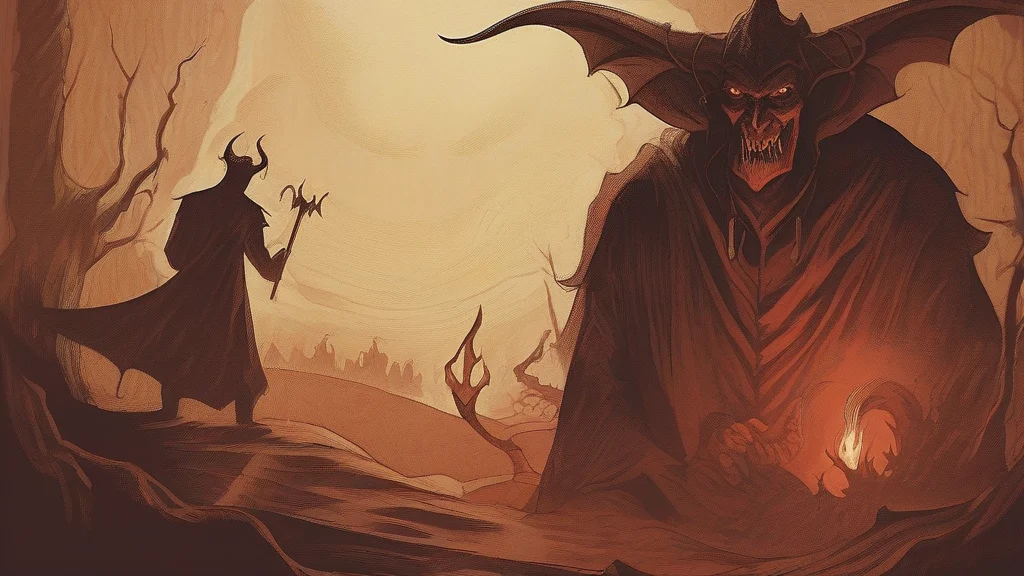
What does diablerie mean?
"Diablerie" is a literary English noun describing reckless mischief or devilish playfulness — behavior that is wicked in spirit but often charming or entertaining in effect. Borrowed from French, where it derives from "diable" (the devil), it can also refer more literally to sorcery or dealings with demonic forces, though this sense is now largely confined to historical, religious, or fantasy writing. In modern usage, calling something "sheer diablerie" suggests roguish flair: a character who lies, cheats, or schemes with such style that the reader cannot help but be amused rather than offended. The word is relatively uncommon in ordinary conversation and belongs chiefly to novels, criticism, and descriptive prose, where its French pedigree lends a touch of elegance. It functions as an uncountable noun with no standard plural form, and it sits comfortably alongside near-synonyms such as "devilry," "devilment," and "roguery."
nounReckless mischief or playful wickedness; also, sorcery or dealings with the devil. The word often carries a tone of stylish, devilish charm rather than genuine evil.
- Playful, roguish mischief or devilishly charming behavior
- Sorcery or dealings with the devil; witchcraft
"The novel's antihero charms the reader with his effortless diablerie, stealing and seducing his way through Paris without a shred of remorse."
"With a glint of diablerie in his eyes, he talked his way past the doorman and into the private party."
"The villagers whispered that the old woman's diablerie was responsible for the failed harvest."
Borrowed straight from French — where "le diable" is the devil — "diablerie" lets you describe someone's deliciously wicked charm in a single word.
Reviewed by Deb Chak, Editor. AI-assisted content curated by RJS Tech Solutions LLP.
Etymology of diablerie
Diablerie entered English in the mid-17th century, borrowed directly from French "diablerie," which itself derives from "diable" (devil), ultimately from Latin "diabolus" and Greek "diabolos" (slanderer). It shares this root with "diabolical" and related words across European languages. The word originally carried strong connotations of actual sorcery and demonic activity before softening over time to denote playful, devil-may-care mischief.
How diablerie is actually used
The word is literary and somewhat rare in everyday speech, lending a slightly archaic or theatrical flavor to writing. Its dominant modern sense emphasizes playful or stylish wickedness rather than literal evil; the sorcery sense appears mostly in historical or fantasy contexts. It carries no plural in common use and is treated as an uncountable noun.
Easily confused with diablerie
"Diabolical" is an adjective meaning extremely wicked or outrageous, while "diablerie" is a noun referring to devilish conduct, mischievous charm, or sorcery.