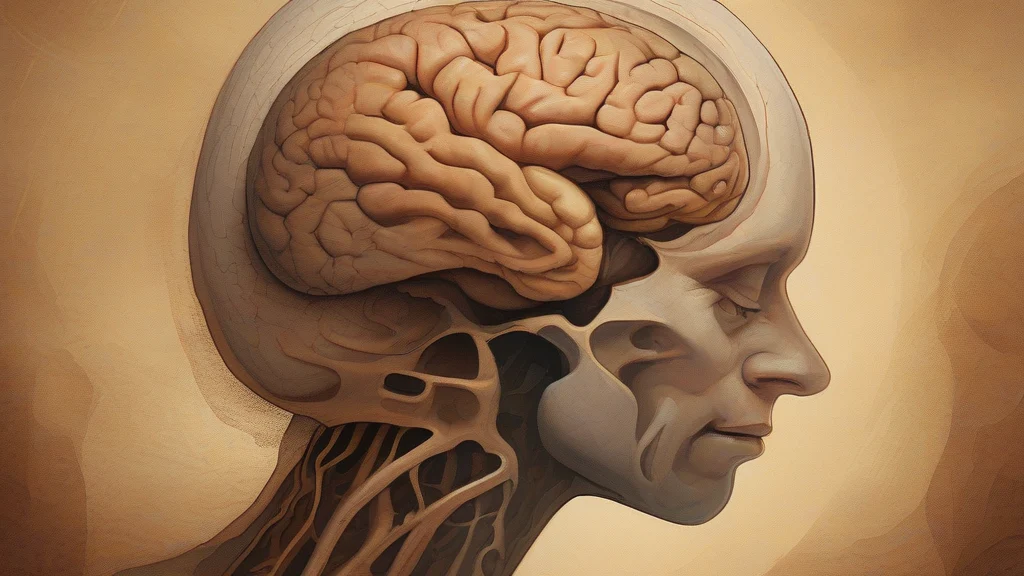
What does diencephalic mean?
The term diencephalic refers to the posterior part of the forebrain in vertebrates. This region is responsible for regulating various bodily functions, including hormone production and sensory processing. In medical research, the diencephalic region is a key area of focus, with scientists studying its structure and function to better understand neurological disorders. The term is used in formal or technical contexts to describe the brain's anatomy and physiology. It is an important concept in neurology and has significant implications for our understanding of the brain's role in regulating bodily functions.
adjectiveRelating to the diencephalon, the posterior part of the forebrain in vertebrates.
- Relating to the diencephalon, the posterior part of the forebrain in vertebrates.
"The diencephalic region of the brain is responsible for regulating various bodily functions."
"The diencephalic region of the brain is responsible for regulating various bodily functions."
"In medical research, the diencephalic region is a key area of focus."
Reviewed by Deb Chak, Editor. AI-assisted content curated by RJS Tech Solutions LLP.
Etymology of diencephalic
The word diencephalic originates from the Greek words 'dien' meaning 'through' and 'encephalon' meaning 'brain'. It was first used in the 19th century to describe the posterior part of the forebrain in vertebrates. The term has since been adopted in medical and scientific contexts to describe the structure and function of the brain.
How diencephalic is actually used
In formal or technical contexts, diencephalic is used to describe the structure and function of the brain.