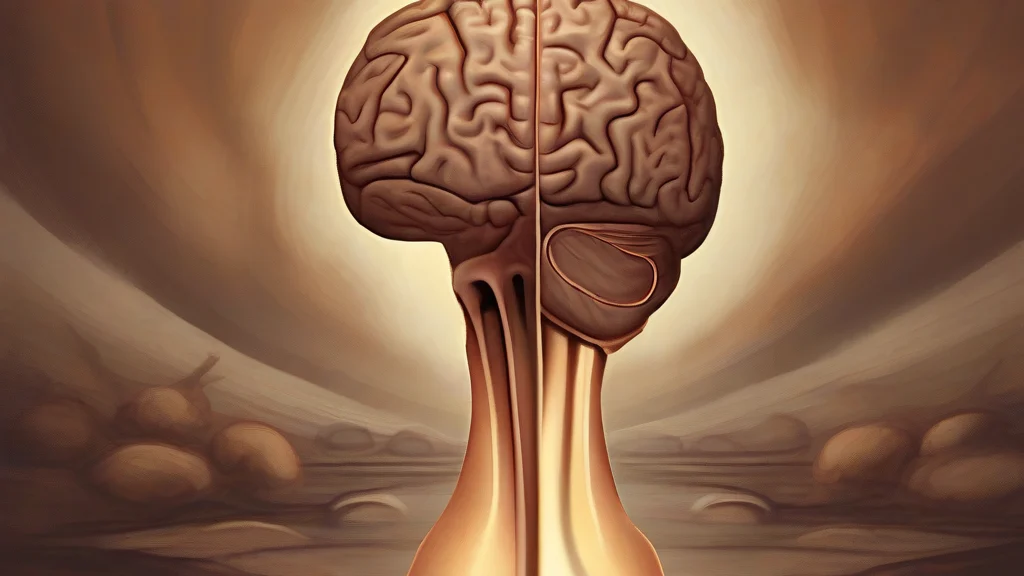
What does diencephalon mean?
The diencephalon is a compact but vital region of the vertebrate brain situated between the brainstem and the cerebral hemispheres. Forming the posterior portion of the embryonic forebrain, it comprises four principal structures: the thalamus, which relays sensory information to the cortex; the hypothalamus, which regulates hunger, thirst, body temperature, and hormone release through the pituitary gland; the epithalamus, which includes the pineal gland; and the subthalamus, involved in motor control. Because so many essential functions converge here, damage to the diencephalon — from stroke, tumour, or trauma — can produce wide-ranging effects on sleep, emotion, temperature regulation, and consciousness. The word derives from Greek roots meaning roughly 'through-brain', reflecting its position as a passageway for neural traffic. It belongs to the specialised vocabulary of anatomy, neuroscience, and medicine rather than everyday language.
nounThe posterior part of the forebrain in vertebrates, comprising the thalamus, hypothalamus, epithalamus, and subthalamus, which acts as a major relay and regulatory centre between the brainstem and the cerebral hemispheres.
- Anatomy: the posterior portion of the forebrain, including the thalamus, hypothalamus, epithalamus, and subthalamus, serving as a relay and regulatory centre.
"Damage to the diencephalon can disrupt sleep, temperature regulation, and sensory processing."
"In the developing embryo, the prosencephalon divides into the telencephalon and the diencephalon."
"Lesions within the diencephalon are known to cause profound disturbances of consciousness."
Both 'diencephala' (Latinised plural) and 'diencephalons' are acceptable; the former predominates in scientific literature.
"Comparative studies examined the diencephala of several mammalian species."
Barely the size of a plum, your diencephalon quietly decides how well you sleep, how warm you stay, and whether that pain signal even reaches your conscious mind.
Reviewed by Deb Chak, Editor. AI-assisted content curated by RJS Tech Solutions LLP.
Etymology of diencephalon
The word 'diencephalon' comes from New Latin, formed from the Ancient Greek elements 'dia-' meaning 'through' or 'between' and 'enkephalos' meaning 'brain'. It was coined as part of the systematic division of the brain into regions such as the telencephalon, mesencephalon, and rhombencephalon during the development of modern neuroanatomical terminology. Related anatomical terms sharing the '-cephalon' element include 'mesencephalon' and 'myelencephalon', each denoting a distinct division of the developing brain.
Related word forms
How diencephalon is actually used
A technical term used almost exclusively in anatomy, neuroscience, medicine, and embryology; it does not appear in everyday speech or general writing. The adjective form 'diencephalic' is common in scientific literature.
Easily confused with diencephalon
The telencephalon is the anterior part of the forebrain comprising the cerebral hemispheres, while the diencephalon is the posterior part containing the thalamus and hypothalamus.
The mesencephalon (midbrain) lies below the diencephalon and handles visual and auditory reflexes, whereas the diencephalon relays signals and regulates autonomic functions.