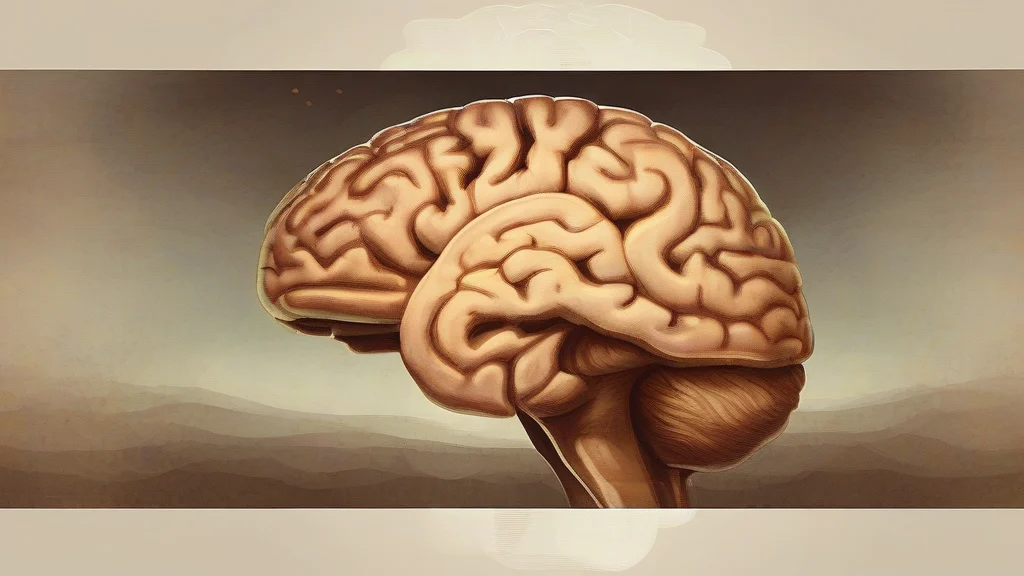
What does forebrain mean?
The forebrain is the largest and most forward-lying of the brain's three principal divisions, alongside the midbrain and hindbrain. In adult vertebrates it encompasses the cerebrum — including the cerebral cortex — together with the thalamus and hypothalamus, structures involved in relaying sensory information and regulating drives such as hunger and temperature. In humans, the forebrain is exceptionally large and is regarded as the seat of higher mental activity: reasoning, language, memory, conscious perception, and voluntary movement all depend on it. The term also appears in embryology, where the developing brain initially consists of three swellings called vesicles; the most rostral of these, the prosencephalon, later subdivides into the telencephalon and diencephalon and gives rise to the entire forebrain. Because it dominates discussions of cognition and neurological disease, forebrain is an essential term in neuroscience, medicine, and psychology, though it remains primarily technical rather than everyday vocabulary.
nounThe forebrain is the anterior and most highly developed division of the vertebrate brain, comprising the cerebrum, thalamus, and hypothalamus (and in some anatomical schemes also the epithalamus). It is responsible for higher cognitive functions such as thought, perception, memory, and voluntary movement.
- The most rostral of the three primary brain divisions in vertebrates, comprising the cerebrum, thalamus, hypothalamus, and associated structures; the seat of higher cognitive function.
- In embryology, the prosencephalon — one of the three primary brain vesicles that form early in neural development before dividing into the telencephalon and diencephalon.
"The cerebral cortex, the seat of conscious thought, forms the outer layer of the forebrain."
"Damage to the forebrain can impair memory, planning, and emotional regulation."
"During the fourth week of gestation, the embryonic forebrain begins to divide into its two major subdivisions."
Rarely pluralised; the plural appears mainly in comparative anatomy or veterinary contexts referring to multiple animals.
"The study compared forebrains across several mammalian species."
Every thought you've ever had passed through your forebrain — the same structure that, in fish, handles little more than smell.
Reviewed by Deb Chak, Editor. AI-assisted content curated by RJS Tech Solutions LLP.
Etymology of forebrain
The word forebrain is formed from the English elements 'fore-' (from Old English 'fore', meaning before or in front) and 'brain', reflecting its position at the front of the brain. It arose as part of the descriptive tripartite naming of the brain's divisions (fore-, mid-, hind-brain) used in comparative anatomy from around the late eighteenth and nineteenth centuries. Its Greek-derived anatomical synonym, prosencephalon, combines 'pro-' (before) with 'encephalon' (brain), and is preferred in formal anatomical nomenclature such as Terminologia Anatomica.
How forebrain is actually used
Forebrain is a technical term used primarily in anatomy, neuroscience, medicine, and biology. It belongs to a standard tripartite scheme of the brain (forebrain, midbrain, hindbrain) familiar to specialists but less so to general readers. In clinical or research contexts it may appear with adjectival modifiers such as 'anterior' or 'basal'. The plural form is rare outside comparative anatomy discussions.
Easily confused with forebrain
The forebrain is the anterior division governing higher cognition, while the hindbrain is the posterior division controlling vital functions such as breathing and balance.