What does diner mean?
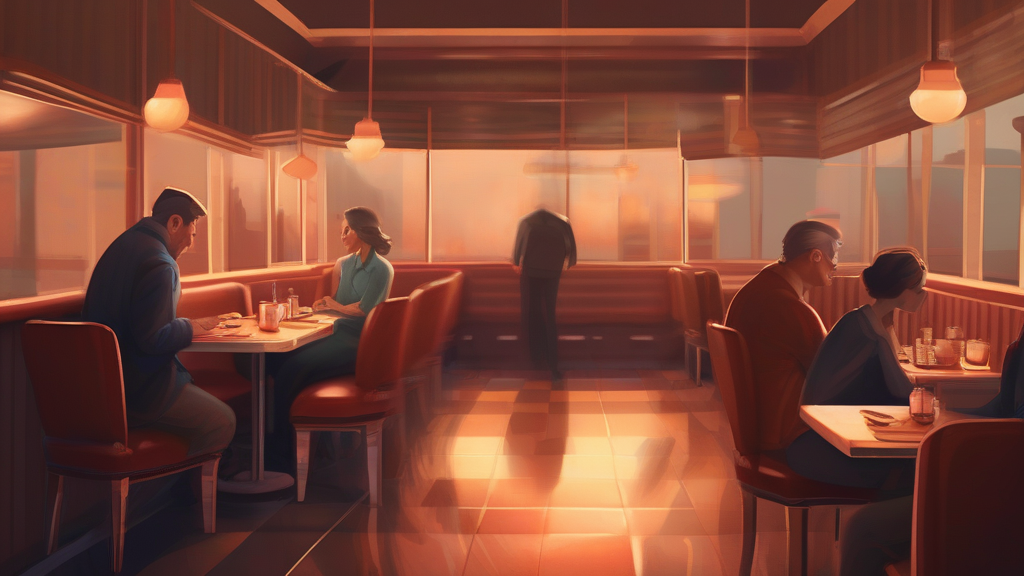
A diner has two distinct meanings in modern English. Most commonly, it refers to a small, informal, and inexpensive restaurant, particularly one in the United States, that serves familiar comfort food such as hamburgers, sandwiches, and all-day breakfast. Diners are traditionally characterized by long counters, booth seating, and extended or round-the-clock hours, and they occupy an affectionate place in American cultural memory as symbols of roadside travel and everyday community life. The second sense is a person who is eating a meal, especially at a restaurant — as when staff attend to each diner individually. The two meanings share a common root in the verb "to dine," meaning to eat dinner or a main meal, which itself derives ultimately from Latin. The word is standard and neutral in tone across both British and American English, though its restaurant sense is strongly associated with North America.
A person who is eating a meal, especially in a restaurant.
"Each diner was offered a complimentary dessert."
This older, original sense remains fully current, especially in hospitality contexts.
A small, informal, usually inexpensive American restaurant serving simple food, often featuring a counter, booths, and long opening hours.
"They grabbed burgers at the diner on Route 9."
Standard regular plural. When referring to the restaurant sense, it may be used for multiple establishments or, informally, for the patrons inside one.
"Several diners along the highway have closed since the new interstate opened."
Many classic American diners were literally built like railroad dining cars — some were even manufactured by companies that made actual train cars.
Reviewed by Deb Chak, Editor. AI-assisted content curated by RJS Tech Solutions LLP.
Etymology of diner
The word diner derives from the verb dine, which entered English in the late Middle Ages from Old French disner ("to dine"), itself descending from Vulgar Latin *disjejunare, meaning to break one's fast — literally "dis-" (undo) plus "jejunare" (to fast). The agent-noun form diner originally meant simply "one who dines," attested by around the early nineteenth century. The restaurant sense arose in American English in the nineteenth century, first applied to railway dining cars and later transferred to stationary roadside eateries built to resemble them.
Related word forms
How diner is actually used
In American English, "diner" as a restaurant carries nostalgic, retro connotations of mid-20th-century Americana — chrome exteriors, neon signs, and counter service. In British English, the word more often refers simply to a person eating.
Easily confused with diner
"Dinner" means a meal (especially the main meal of the day), while "diner" means either a person eating or a small casual restaurant — they differ by only one letter.