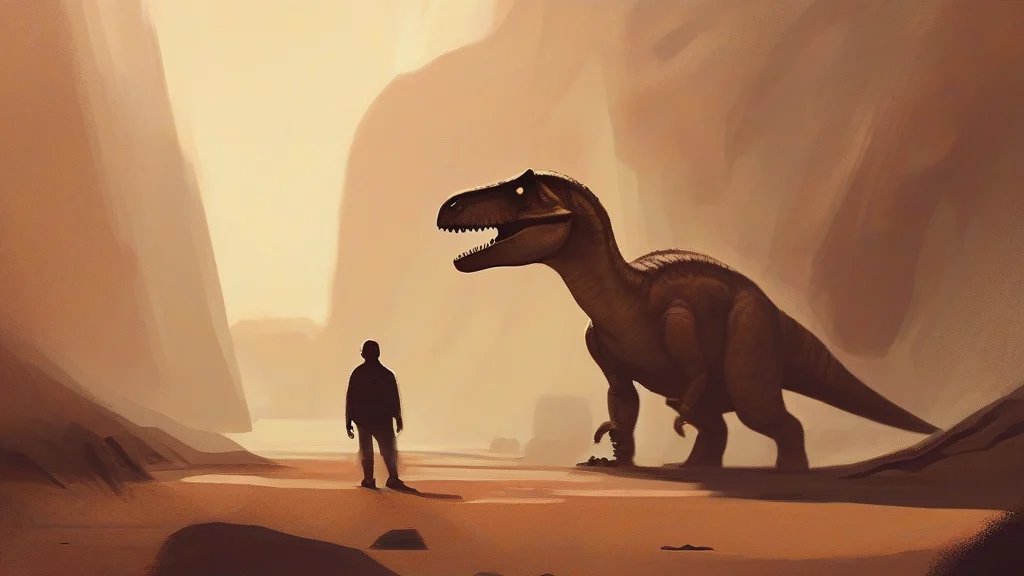
What does dinosaurian mean?
Dinosaurian functions chiefly as an adjective meaning of or relating to dinosaurs, the large extinct reptiles that dominated the Mesozoic Era. It also serves as a noun referring to a dinosaur itself. Beyond strict scientific use, the word carries a vivid figurative sense: anything enormous, lumbering, or hopelessly out of date may be described as dinosaurian, whether a bureaucratic institution, an aging computer system, or an outdated business model. This figurative use borrows the popular image of the dinosaur as a magnificent but doomed giant — impressive in scale yet ill-suited to survival. The word derives from "dinosaur," coined by the British paleontologist Richard Owen in 1842 from Greek roots meaning "terrible lizard." While "dinosaurian" is less common than "dinosaur" itself, it is well established in both scientific literature and general prose, lending a slightly elevated, learned tone where plain "dinosaur-like" might sound informal.
Of or relating to dinosaurs; characteristic of or resembling a dinosaur, especially in size or antiquity.
"The fossil bed yielded dozens of dinosaurian bones dating to the Jurassic period."
In figurative use, often implies obsolescence or unwieldiness rather than mere size.
A dinosaur; occasionally, any creature or thing resembling a dinosaur.
"The gallery displays a cast of a dinosaurian alongside smaller marine fossils."
Used only when the word functions as a noun; rare compared with simply using "dinosaurs."
"Early naturalists debated how these dinosaurians moved before complete skeletons were uncovered."
The word 'dinosaur' didn't exist until 1842 — so every writer before then had to describe these beasts without a single dedicated word for them.
Reviewed by Deb Chak, Editor. AI-assisted content curated by RJS Tech Solutions LLP.
Etymology of dinosaurian
Dinosaurian is formed from "dinosaur" plus the adjectival suffix "-ian." The base word was coined in 1842 by Sir Richard Owen, combining the Greek "deinos" (terrible, fearfully great) with "sauros" (lizard). The suffix "-ian" comes ultimately from Latin "-ianus," used to form adjectives of belonging or relation. Related words sharing the Greek root "sauros" include "saurian," "tyrannosaur," and "plesiosaur."
Related word forms
How dinosaurian is actually used
Primarily formal or technical in its literal scientific sense, appearing mostly in paleontology writing. In figurative use it carries a mildly derogatory connotation, suggesting something vast, slow-moving, or obsolete — similar in spirit to calling something a "dinosaur," though more literary in tone.
Easily confused with dinosaurian
"Saurian" refers to lizards or lizard-like creatures generally, while "dinosaurian" specifically relates to dinosaurs, the extinct Mesozoic reptiles.