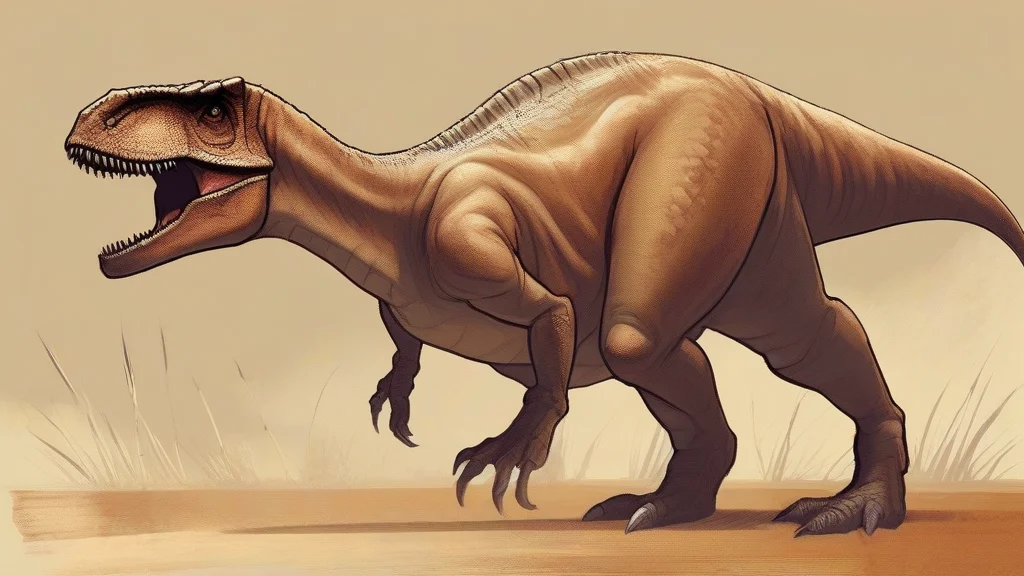
What does dinosaur mean?
A dinosaur is one of a group of extinct reptiles that dominated life on land for over 160 million years, from the Late Triassic period until the mass extinction roughly 66 million years ago. Dinosaurs ranged from chicken-sized species to colossal animals like Argentinosaurus, and they are defined scientifically by anatomical features such as an upright stance with legs positioned directly beneath the body. The word also carries a well-established figurative meaning: someone or something hopelessly old-fashioned or unwilling to adapt, as in calling a stubborn executive a dinosaur. Notably, birds are now understood to be the direct descendants of small feathered theropod dinosaurs, making them living dinosaurs in the strict evolutionary sense — a fact that continues to reshape how we understand both the word and the animals it describes.
Any of a group of extinct terrestrial reptiles belonging to the clade Dinosauria, which thrived from the Late Triassic through the end of the Cretaceous period.
"The children were fascinated by the life-size dinosaur models at the natural history museum."
(Informal, figurative) A person, organization, or thing that is outdated, obsolete, or resistant to progress and change.
"Critics dismissed the aging senator as a political dinosaur clinging to outdated policies."
This figurative sense carries a mildly pejorative connotation and is common in journalism and everyday speech.
Regular plural formed by adding -s. In scientific writing, 'Dinosauria' is used for the clade as a whole.
"Dinosaurs roamed the Earth for over 160 million years before their sudden extinction."
The word 'dinosaur' didn't exist until 1842 — the Victorians literally had to invent a name for creatures no human had ever imagined.
Reviewed by Deb Chak, Editor. AI-assisted content curated by RJS Tech Solutions LLP.
Etymology of dinosaur
The word 'dinosaur' was coined by English paleontologist Sir Richard Owen in 1842, combining the Greek roots 'deinos' (meaning 'terrible' or 'fearfully great') and 'sauros' (meaning 'lizard' or 'reptile'). Owen intended the name to convey awe at the magnitude and strangeness of the fossil reptiles then being discovered, rather than to suggest ferocity alone. The Greek root 'sauros' also appears in other scientific names such as 'tyrannosaur' and 'stegosaurus', while 'deinos' survives in words like 'deinonychus'.
Related word forms
How dinosaur is actually used
In scientific usage, 'dinosaur' refers strictly to members of the clade Dinosauria and excludes pterosaurs (flying reptiles) and marine reptiles like ichthyosaurs and plesiosaurs, though popular usage often lumps these together. The figurative sense is informal and mildly derogatory. Birds are technically living dinosaurs under modern cladistic classification, a fact that surprises many people.
Easily confused with dinosaur
Pterodactyls were flying reptiles that lived alongside dinosaurs but are not classified as dinosaurs themselves.
Plesiosaurs were marine reptiles of the Mesozoic era and are not dinosaurs.