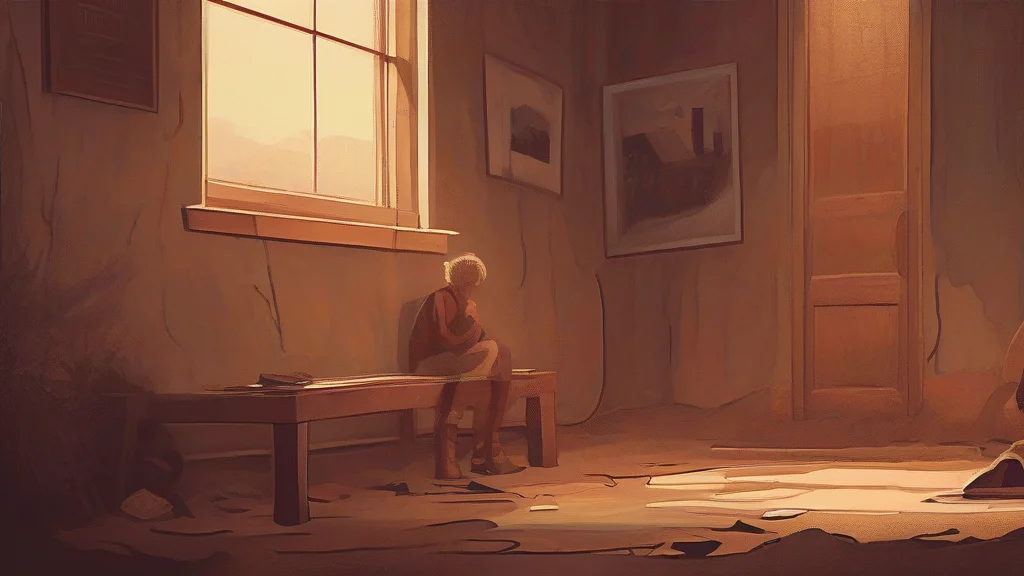
What does disenchanted mean?
Disenchanted describes the state of having lost one's enthusiasm, admiration, or belief in something that once seemed appealing or worthy — a political movement, an institution, a career, or even a person. It is most commonly used predicatively with the preposition 'with', as in 'voters became disenchanted with the government'. The word's power lies in its metaphor: to be enchanted is to be under a spell of delight or fascination, so to become disenchanted is for that spell to have been lifted, revealing ordinary reality beneath. This gives the word a literary, slightly wistful quality compared with blunter alternatives like 'fed up'. It carries a connotation of quiet, considered disappointment rather than anger, and it implies prior hope or affection — one cannot be disenchanted by something never admired. Standard in both British and American English, it suits formal journalism as comfortably as everyday conversation.
No longer believing in the value or appeal of something; freed from or stripped of former enthusiasm, especially toward an institution, cause, or person once admired.
"A disenchanted electorate stayed home in record numbers."
Typically followed by 'with'; often intensified by adverbs such as 'deeply', 'thoroughly', or 'increasingly'.
Past tense and past participle of disenchant: to free from enchantment; to disappoint by destroying former enthusiasm or illusions.
"The scandal disenchanted many of the charity's longtime supporters."
This verbal use is far less common than the adjectival sense.
'Disenchanted' literally means to have a magic spell removed — so when you're disenchanted with your job, etymologically speaking, the enchantment has simply worn off.
Reviewed by Deb Chak, Editor. AI-assisted content curated by RJS Tech Solutions LLP.
Etymology of disenchanted
Disenchanted derives from the verb 'disenchant', formed in English from the prefix 'dis-' (expressing reversal) combined with 'enchant'. 'Enchant' comes via Old French 'enchanter' from Latin 'incantare', meaning 'to chant a spell upon', itself built on 'cantare', a frequentative of 'canere', 'to sing'. Thus the underlying image is of a sung spell being undone. The adjective has been in use since at least the early modern period and shares its Latin root with words such as 'chant', 'incantation', and 'cantor'.
Related word forms
How disenchanted is actually used
The word is standard in both formal and informal registers. It is almost always followed by 'with' when specifying the object of disappointment ('disenchanted with politics'). Its connotation is typically sober or melancholy rather than angry — it suggests quiet loss of faith rather than active resentment.
Easily confused with disenchanted
Both describe lost belief, but 'disillusioned' emphasizes the collapse of an illusion, while 'disenchanted' carries the older image of a magic spell being lifted, often implying lost delight rather than lost illusion.