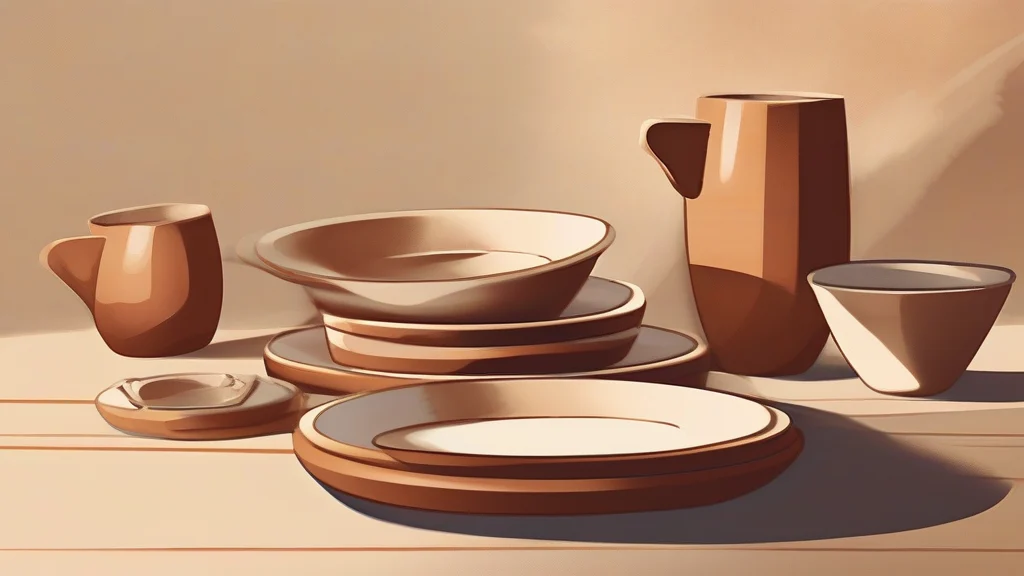
What does dishware mean?
Dishware is a collective noun referring to the plates, bowls, cups, saucers, and other vessels used to serve and eat food. Functioning as an uncountable noun, it treats these items as a single category, as in 'the restaurant ordered new dishware' or 'she inherited her grandmother's fine dishware.' The term is especially prevalent in American English, while British English more often uses 'crockery'; related terms include 'tableware,' which encompasses cutlery and glassware as well, and 'dinnerware,' typically denoting matching sets of plates and bowls. Dishware carries no strong connotation on its own, though modifiers like 'fine,' 'antique,' or 'chipped' lend it particular character in context. Its first element, 'dish,' descends from Old English 'disc,' borrowed from Latin 'discus' — the same root behind 'disc,' 'desk,' and 'dais.' Practical and precise, dishware is a useful word in domestic, culinary, and commercial writing wherever one needs a single term covering all eating and serving vessels.
nounDishware refers collectively to dishes—plates, bowls, cups, saucers, and similar items—from which food is served or eaten. It is a mass (uncountable) noun used especially in American English.
- Plates, bowls, cups, and other vessels used for serving or eating food, considered collectively.
"She carefully packed the antique dishware before the move."
"The newlyweds registered for a complete set of porcelain dishware."
"Please rinse the dishware and load it into the dishwasher."
Dishware is a mass noun and has no plural form; quantity is expressed with phrases like 'pieces of dishware' or 'sets of dishware'.
"They donated several boxes of dishware to the shelter."
The 'dish' in dishware traces back to Latin 'discus' — the very word that gave us 'disc', 'desk', and even 'dais'.
Reviewed by Deb Chak, Editor. AI-assisted content curated by RJS Tech Solutions LLP.
Etymology of dishware
Dishware is formed by compounding two native English elements: 'dish,' from Old English 'disc,' itself borrowed from Latin 'discus' meaning a flat plate or quoit, and 'ware,' from Old English 'waru,' meaning manufactured goods or merchandise. The compound emerged as a straightforward way to denote dishes as a category of goods, following the pattern of older formations like 'hardware,' 'software,' and 'tableware.' Its Latinate root also connects it to cognates such as 'disc,' 'disk,' 'dais,' and 'desk.'
How dishware is actually used
Dishware is an uncountable (mass) noun in standard usage, so it takes singular agreement ('the dishware is clean'). The term is most common in North American English; British speakers typically say 'crockery' instead. It is neutral in register, suitable for both everyday and commercial contexts such as retail and wedding registries.
Easily confused with dishware
Dishwater is the water left over after washing dishes, while dishware is the dishes themselves.