What does crockery mean?
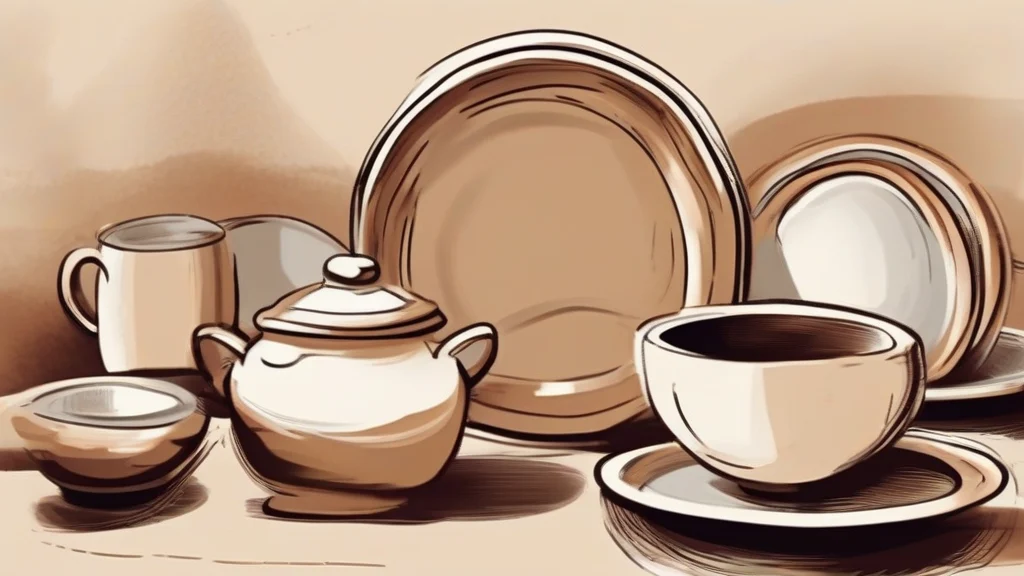
Crockery is a collective term for the plates, bowls, cups, saucers, and other dishes made of ceramic materials such as earthenware, stoneware, or china, used for serving and eating meals. It functions as an uncountable mass noun: one speaks of buying, packing, washing up, or breaking crockery rather than counting individual pieces. The word is used chiefly in British English, with American English preferring terms such as 'dishes' or 'dishware'. Its connotations are domestic and practical — crockery suggests the everyday equipment of a kitchen or dining table rather than fine porcelain, though good-quality sets are sometimes described as china to distinguish them. The word derives from 'crock', an old term for an earthenware pot, combined with the suffix '-ery', which forms nouns denoting classes of objects. Common contexts include house moves, weddings (where crockery sets are traditional gifts), restaurants, and accidents involving breakage.
nounPlates, dishes, cups, and other articles of earthenware or china used for serving and eating food; collectively, tableware made of ceramic material.
- Collectively, the plates, dishes, cups, saucers and other ceramic items used for serving and eating food.
"She packed the crockery carefully in newspaper before moving house."
"After the earthquake, shards of broken crockery littered the kitchen floor."
"The hotel's dining room was equipped with heavy white crockery that could withstand daily use."
Crockery is a mass noun with no plural form; quantity is expressed by phrases such as 'pieces of crockery' or 'sets of crockery'.
"They donated several boxes of crockery to the charity shop."
In cricket commentary, a bowler who takes wickets has been said to 'break the crockery' — but the word itself just means your everyday plates and pots.
Reviewed by Deb Chak, Editor. AI-assisted content curated by RJS Tech Solutions LLP.
Etymology of crockery
Crockery derives from 'crock', a Middle English word for an earthenware pot or jar, which traces back through Old English 'croc' meaning pot or vessel. Combined with the suffix '-ery', which forms nouns denoting collections or classes of things, it emerged to mean pottery vessels collectively. It shares its root with other vessel words such as 'cruse' and relates broadly to the family of words for ceramic containers in Germanic languages.
How crockery is actually used
Crockery is a collective, uncountable mass noun and is used far more commonly in British English; American speakers typically say 'dishes' or 'dishware' instead. The term carries a homely, everyday connotation and often appears in contexts of moving house, washing up, or breakage.
Easily confused with crockery
Cutlery refers to implements for eating such as knives, forks and spoons, while crockery refers to ceramic dishes like plates and bowls.