What does divertimento mean?
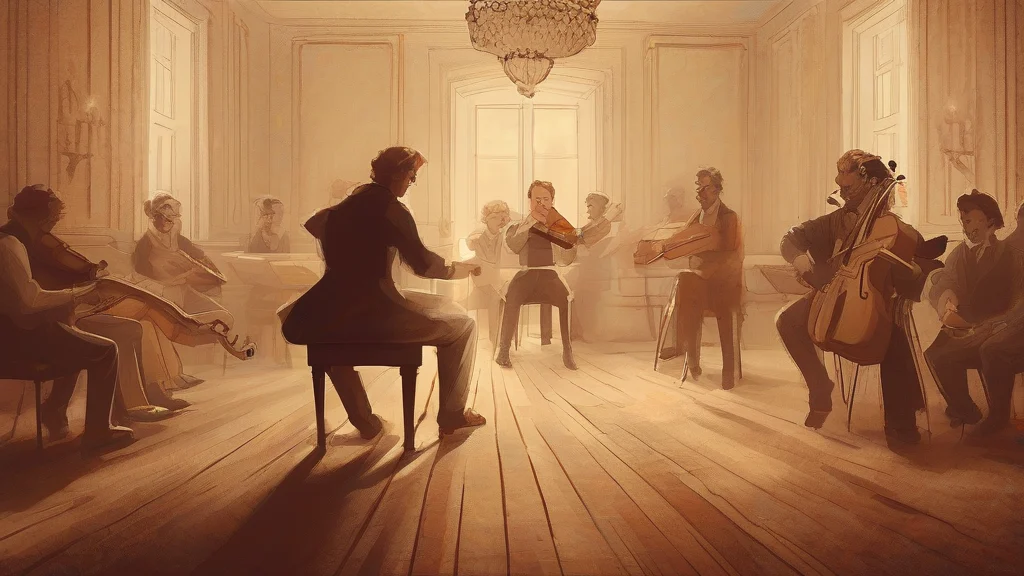
A divertimento is a light-hearted instrumental composition, usually in several movements, written primarily to entertain rather than to convey profound artistic weight. Flourishing in the eighteenth century, the genre occupied a middle ground between the suite and the symphony, often performed at social gatherings by small ensembles of strings or winds. Haydn, Mozart, and Boccherini produced notable examples; Mozart's Divertimento in E-flat major for string trio is regarded as a masterpiece of the form despite the genre's modest ambitions. By the nineteenth century the divertimento had largely been absorbed into other forms, though composers occasionally revived the title for relaxed, untroubled works — Bartók's 1939 Divertimento being a famous modern instance. The term derives from the Italian verb 'divertire', meaning to amuse or divert, and shares roots with English words such as 'diversion'. In general usage it retains a connotation of elegance, leisure, and cultivated pleasure.
A light, entertaining instrumental composition, typically in several movements, especially one popular during the Classical period of the late 18th century.
"The concert concluded with a delightful Mozart divertimento played by a string trio."
The Italian plural 'divertimenti' is preferred in formal musical writing.
An amusement or diversion; a pleasant pastime.
"To him, sketching was merely a divertimento from more serious labours."
This sense is now rare and chiefly literary.
The Italian plural 'divertimenti' is standard in musical and academic contexts; the anglicized 'divertimentos' also occurs but is less favoured.
"The archive contains several early divertimenti composed for open-air performance."
Mozart wrote his longest instrumental work not as a symphony but as a divertimento — six movements of pure pleasure meant to entertain rather than impress.
Reviewed by Deb Chak, Editor. AI-assisted content curated by RJS Tech Solutions LLP.
Etymology of divertimento
'Divertimento' comes from Italian, formed from the verb 'divertire' (to amuse, to divert), which itself derives from Latin 'divertere', meaning to turn aside or away. The word entered English usage in the early eighteenth century alongside the rise of the musical genre it names. It is closely related to the French 'divertissement' and shares a root with English 'diverse' and 'diversion', all tracing back to the Latin combination of 'dis-' (apart) and 'vertere' (to turn).
Related word forms
How divertimento is actually used
The plural is 'divertimenti', following Italian convention, and is preferred over the anglicized 'divertimentos' in musical writing. The word carries a refined, somewhat classical register and appears almost exclusively in discussions of music history and performance. It should not be confused with 'divertissement', its French cousin used in ballet contexts.
Easily confused with divertimento
'Divertissement' refers to a dance or theatrical entertainment inserted within a larger work such as an opera or ballet, whereas a 'divertimento' is a standalone instrumental chamber or orchestral piece.