
What does divertissement mean?
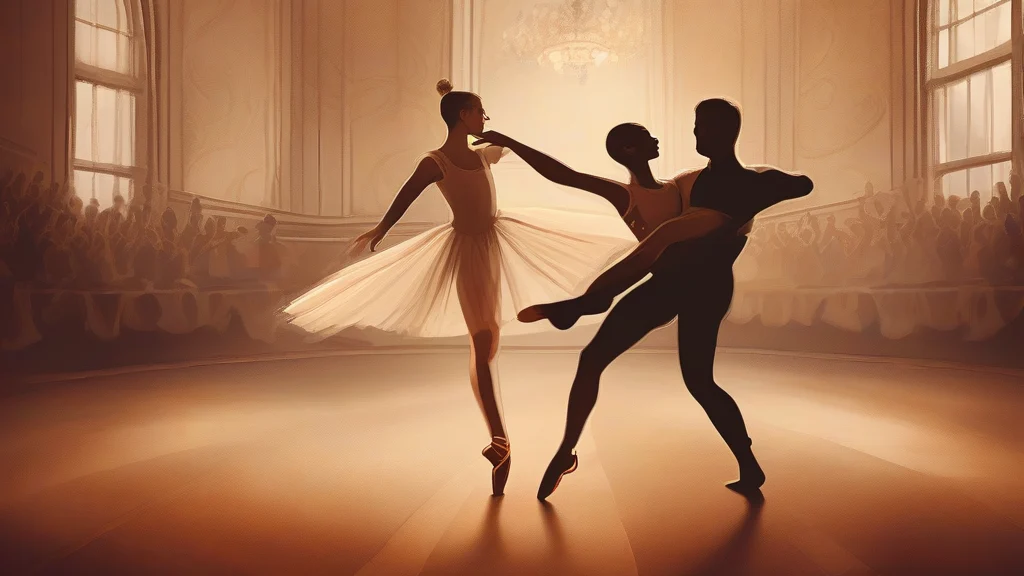
A divertissement is an entertainment — literally, a diversion. In everyday but rather formal usage, the word denotes any pleasant pastime or amusement that occupies the mind agreeably. Its most familiar modern home, however, is the theatre: in ballet and opera, a divertissement is a self-contained suite of dances or musical pieces inserted into a larger work, often designed to showcase star performers or evoke a particular country or mood rather than to advance the story. The famous second act of The Nutcracker, with its chain of Spanish, Arabian, Chinese, and Russian dances, is a classic example. Borrowed from French in the seventeenth century and ultimately rooted in Latin divertere, 'to turn aside', the word carries connotations of elegance, spectacle, and cultivated leisure. Writers use it when they wish to lend a refined or slightly cosmopolitan air to what might otherwise simply be called entertainment.
nounA diversion or amusement; in ballet, a suite of dances or entertainments inserted into a larger work, typically not essential to the plot.
- A diversion or entertainment; something that amuses or occupies the attention pleasantly.
- In ballet and opera, a self-contained suite of dances or musical entertainments inserted into a larger work, often showcasing particular dancers and not central to the narrative.
"The second act featured a lavish divertissement of Spanish and Russian dances that delighted the audience."
"A game of cards proved a welcome divertissement during the long sea voyage."
"The Nutcracker's second act is famous for its sequence of national divertissements."
The anglicized plural 'divertissements' is standard in English writing; the invariant French form is occasionally seen in specialist ballet contexts.
"Act Two unfolds as a series of national divertissements, each more dazzling than the last."
Borrowed straight from the French court of Louis XIV, 'divertissement' still names the crowd-pleasing dance suites that let ballet audiences catch their breath — spectacle first, plot later.
Reviewed by Deb Chak, Editor. AI-assisted content curated by RJS Tech Solutions LLP.
Etymology of divertissement
Divertissement comes from the French verb divertir ('to divert, amuse'), formed from Latin divertere, meaning 'to turn aside' or 'to turn in different directions'. It was borrowed into English in the seventeenth century, when French courtly culture supplied much of the vocabulary of leisure and spectacle. The same Latin root gives English divert, diversion, and diversify, while Italian contributed the closely related musical term divertimento. Its association with staged dance entertainments reflects its long history at the French court, where elaborate spectacles were a staple of aristocratic life.
How divertissement is actually used
The word retains a distinctly formal, even continental flavour in general English; outside discussions of ballet and theatre it can sound affected. It entered English via French, and pronunciation often preserves a French flavour with a nasal final vowel; an anglicized ending is also heard. The plural may be given as 'divertissements' (anglicized) or left unchanged after the French fashion, though the anglicized plural is standard in English texts.
Easily confused with divertissement
A divertimento is an instrumental musical composition, usually light and in several movements, whereas a divertissement is a dance or entertainment interlude, especially within a ballet.
Diversion is the general English word for an activity that distracts or amuses, while divertissement is a French loanword used mainly for theatrical or balletic entertainments.