What does djinn mean?
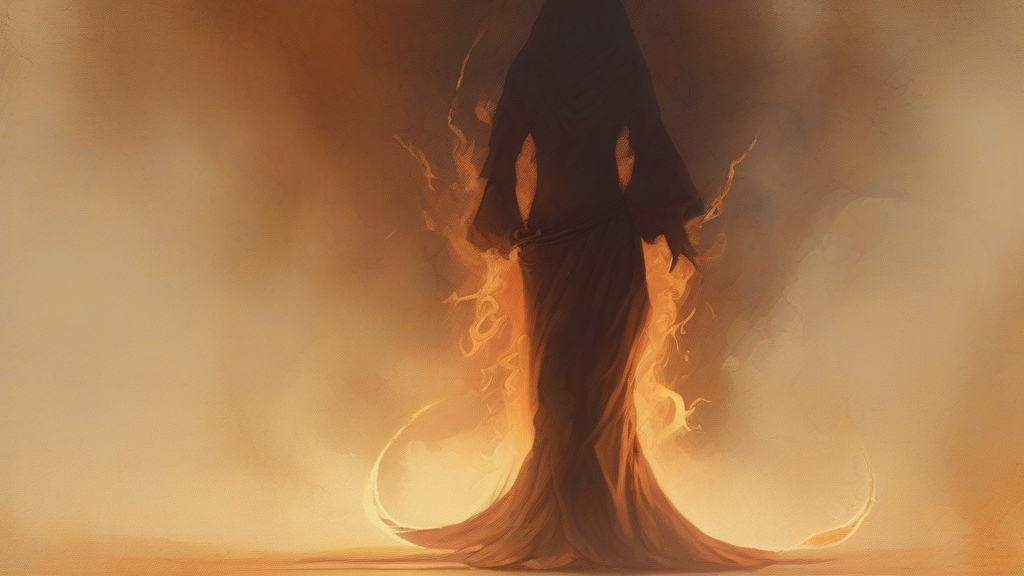
Djinn refers to supernatural beings central to Arabian folklore and Islamic theology — intelligent entities created from smokeless fire who, unlike angels, possess free will and can choose between good and evil. In traditional accounts, djinn inhabit an unseen world parallel to that of humans, can marry and have children, and are capable of shapeshifting into animals, people, or whirlwinds. While some are righteous believers, others are mischievous or malevolent, and stories of djinn possessing places, objects, or people remain widespread across the Middle East and South Asia. The word entered European languages through Arabic and gave rise to the familiar English 'genie,' popularized by translations of the Arabian Nights. Today 'djinn' appears frequently in literature, film, and games as a term of exotic supernatural menace or wonder, retaining stronger ties to its original cultural and religious context than the more whimsical 'genie.'
A supernatural spirit of Arabian and Islamic mythology, made of smokeless fire, able to assume various forms and exercise free will for good or evil.
"The storyteller described how a clever merchant outwitted a vengeful djinn he had accidentally freed from a brass lamp."
Strictly a plural/collective in Arabic; the singular is 'djinni' (or 'jinni'), though English usage often treats 'djinn' as singular.
Any evil or troublesome spirit; a demon.
"Superstition held that a djinn haunted the crossroads, leading travelers astray at night."
Because 'djinn' is already plural or collective in Arabic, it is commonly used unchanged for both singular and plural senses in English; the anglicized 'djinns' is also accepted. The true Arabic singular is 'djinni' or 'jinni.'
"Legends speak of whole tribes of djinn dwelling in the empty quarters of the desert."
Every wish-granting genie you've ever heard of — from Aladdin to I Dream of Jeannie — traces back to one word: djinn, the spirits Arabs believed roamed the desert long before Islam.
Reviewed by Deb Chak, Editor. AI-assisted content curated by RJS Tech Solutions LLP.
Etymology of djinn
Djinn derives directly from the Arabic word 'jinn' (جِنّ), meaning spirits or demons, which itself comes from the Arabic root j-n-n relating to concealment or invisibility — beings hidden from human sight. The form 'djinn' entered English via French transliteration conventions in the nineteenth century, alongside the earlier borrowing 'genie,' which came through French from the Arabic. Cognate forms include 'jinn' (a common English spelling), the singular 'jinni' or 'djinni,' and the related 'majnun,' literally 'possessed by a jinn,' used to mean madman.
Related word forms
How djinn is actually used
'Djinn' is the French-derived spelling of the Arabic 'jinn' (جِنّ); it is technically a plural form in Arabic, though in English it is often treated as singular or collective. 'Djinni' or 'jinni' serves as the singular form. The word carries connotations ranging from neutral or benevolent to malevolent depending on context, and appears most often in literary, religious, and fantasy contexts rather than everyday speech.
Easily confused with djinn
'Gin' is an alcoholic spirit distilled from juniper berries, while 'djinn' is a supernatural being from Arabic folklore.
'Gene' is a unit of heredity in biology, unrelated to the supernatural 'djinn' despite similar spelling.