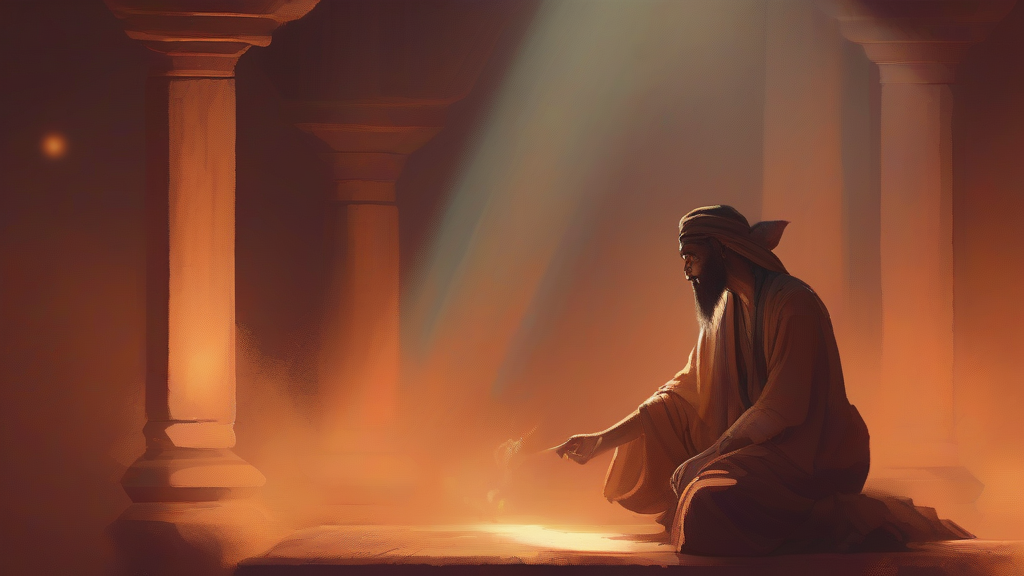
What does djinni mean?
A djinni is an individual supernatural spirit in Arabian and Islamic tradition, the singular form of the collective noun 'djinn' (or jinn). In Islamic belief, djinn are real beings created by God from smokeless fire, distinct from both humans and angels, and endowed with free will — meaning they may be righteous, indifferent, or wicked. A djinni can appear in human or animal form, turn invisible, and influence the human world, which explains its prominent role in folklore, from the tales of the Arabian Nights to modern fantasy fiction. English readers more often encounter the anglicized word 'genie', which suggests the friendly, wish-granting servant of popular culture; 'djinni', by contrast, preserves the older, richer sense of a powerful and potentially dangerous being. The word is used mainly in religious, literary, and folkloric writing, and it offers writers a precise, evocative term when they want to invoke the authentic Arabic tradition rather than its Westernized image.
nounA djinni is a supernatural spirit or genie in Arabian and Islamic mythology, capable of appearing in human or animal form and exercising supernatural influence over human affairs. It is the singular form of 'djinn' (also spelled jinn).
- A single supernatural being in Arabian and Islamic mythology, created from smokeless fire, possessing free will, and able to take various forms; the singular of djinn.
"The fisherman released the djinni from the bottle, only to face its wrath."
"According to the Quran, the djinni was created from smokeless fire, unlike humankind, which was shaped from clay."
"The old storyteller warned that a djinni trapped for centuries would not grant wishes kindly when freed."
The plural follows Arabic morphology: one djinni, two or more djinn. The collective 'the djinn' can also refer to the race of spirits as a whole.
"Legends warn that the djinn gather in deserted places after nightfall."
In Islamic tradition, djinn aren't just fairy-tale genies — they're real beings made of smokeless fire, with free will to be good or evil, just like humans.
Reviewed by Deb Chak, Editor. AI-assisted content curated by RJS Tech Solutions LLP.
Etymology of djinni
The word comes from Arabic 'jinnī' (جنّي), meaning 'of the jinn' or 'a demon, spirit', derived from 'jinn', the collective noun for a class of spirits believed in pre-Islamic and Islamic Arabia to inhabit the world unseen. The Arabic root j-n-n carries the sense of concealment or hiddenness, related to words meaning 'to cover' or 'to be dark'. European languages borrowed the word through contact with Arab scholarship and literature: French produced 'génie', which entered English as 'genie' in the early eighteenth century largely via translations of the Arabian Nights, while 'djinni' and 'jinni' arrived later as more direct transliterations favored by scholars and translators of Arabic texts.
Related word forms
How djinni is actually used
'Djinni' is a singular noun whose plural is 'djinn' (following Arabic grammar), though English speakers sometimes treat 'djinn' itself as singular. The spelling variants 'jinni', 'jinee', and 'djinnie' also occur, but 'djinni' and 'jinni' are the most common scholarly transliterations. The word belongs chiefly to literary, folkloric, and religious contexts rather than everyday speech, where 'genie' dominates. In Islamic theology, djinn are regarded as real creatures with moral agency, not mere mythological figures.
Easily confused with djinni
'Genie' is the anglicized form popularized by translations of the Arabian Nights, often implying a wish-granting, benevolent figure, whereas 'djinni' is the more faithful transliteration from Arabic and carries the fuller range of meanings — including malevolent spirits — found in Islamic tradition.
'Djinn' (or jinn) is the plural or collective noun referring to the class of spirits as a whole, while 'djinni' refers to a single individual spirit.