
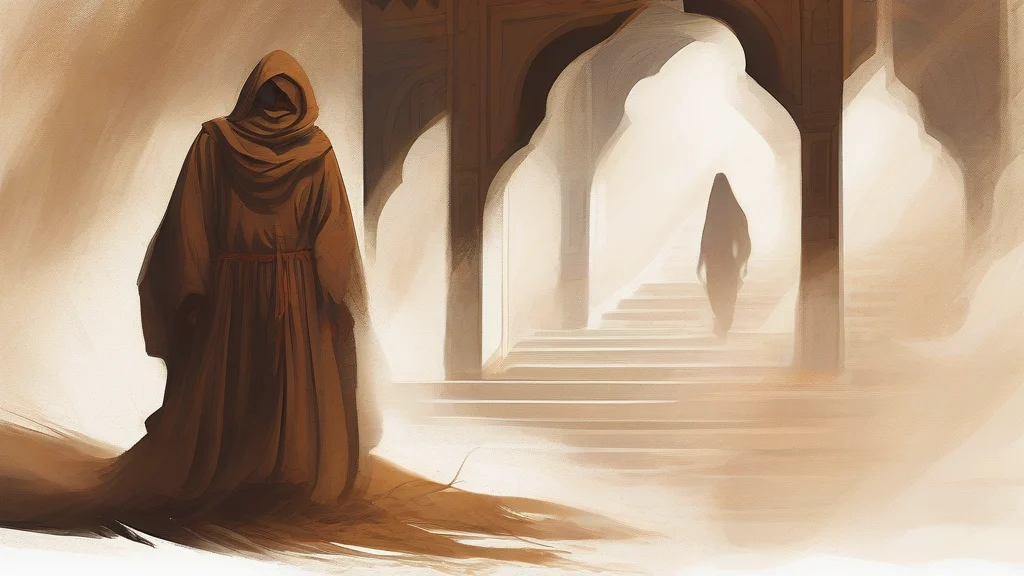
What does jinn mean?
A jinn is a supernatural being from Islamic tradition, a category that includes spirits with diverse natures, moral character, and powers. The word entered English through Arabic and was popularized in Western culture by stories such as the tale of Aladdin, in which a jinn is released from a lamp and grants wishes. In modern English, “jinn” is often treated as a synonym of “genie,” but the traditional concept is broader than the wish-granting creature familiar from folklore and fantasy. “Jinn” is also used in religious, literary, and cultural discussions of the supernatural beings described in Islamic texts and folklore. The plural form is “jinn,” while “jinni” is the traditional singular. The word is often used in a formal or literary register, though it has become familiar through popular entertainment. Its interest lies in the difference between the culturally specific jinn and the narrower Western image of a benevolent or mischievous wish-granting genie.
nounIn Islamic tradition, a class of supernatural beings or spirits created from smoke and fire; in modern English, the word is also used as a spelling variant of “jinni,” especially in fantasy and popular culture.
- A supernatural being or spirit in Islamic tradition, often possessing powers or knowledge beyond those of ordinary humans.
- In modern fantasy and popular usage, a jinn or genie, especially one summoned from a lamp or vessel and capable of granting wishes.
"The story depicted a jinn emerging from an ancient lamp and granting the traveller three wishes."
"The scholar consulted a book of jinn stories preserved in Islamic folklore."
"In the television adaptation, a jinn appears in a copper vessel and offers to help the young protagonist."
The traditional plural is “jinn,” with “jinns” also used in modern English. The traditional singular is “jinni.”
"Many jinn are said to inhabit the desert, while other traditions portray them as frightening and unpredictable."
The familiar wish-granting genie descends from the jinn of Islamic tradition, a much larger and more varied class of supernatural beings.
Reviewed by Deb Chak, Editor. AI-assisted content curated by RJS Tech Solutions LLP.
Where does jinn come from?
The word comes from Arabic jinn, a plural term for a class of beings in Islamic tradition; the traditional singular is jinnī. Arabic jinn is related to jinniyya, a collective form meaning something associated with jinn. English borrowed the term through translations and accounts of Middle Eastern folklore, while the spelling “genie” developed through French genie from the same Arabic source.
Related word forms
How jinn is actually used
The word is especially associated with Arabic and Islamic traditions and can sound literary or exotic in English. In its original grammatical sense, “jinn” is plural, while “jinni” is the usual singular form; modern fantasy writing often uses “jinn” for either singular or plural.
Easily confused with jinn
“Jinn” comes from Islamic tradition, whereas “genie” is the more familiar English form associated with stories of magic lamps and wishes.