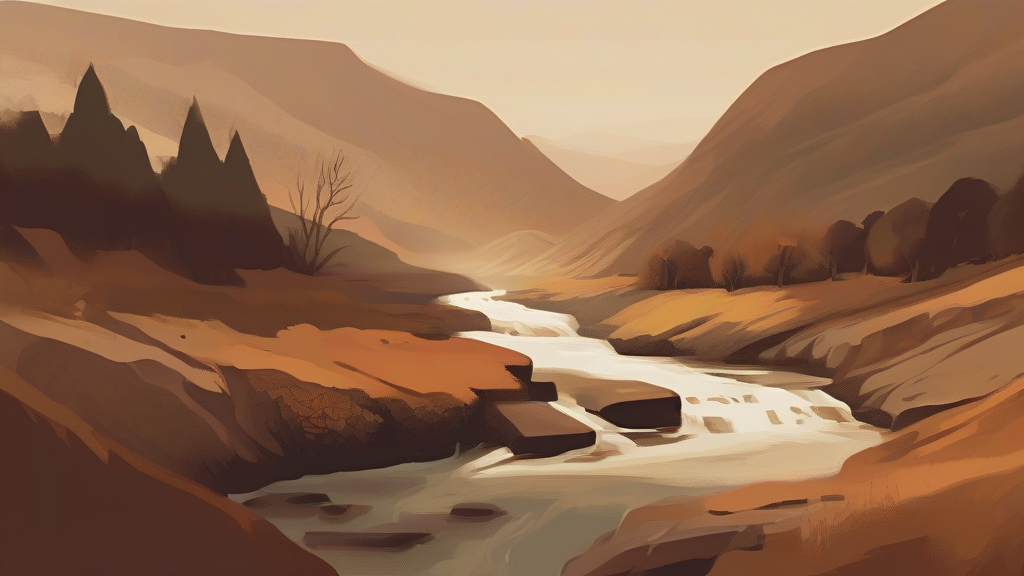
What does dolina mean?
A dolina is a shallow, roughly circular or oval depression in the ground surface, characteristic of karst landscapes underlain by soluble rocks such as limestone or gypsum. Dolinas form when slightly acidic water gradually dissolves the rock below, or when underground cavities collapse, causing the overlying material to subside into a basin. They range from a few metres to hundreds of metres across and may hold soil, vegetation, ponds, or even entrances to cave systems. The term comes from the Slovenian word for a small valley, reflecting the word's origin in the classic karst region of the Dinaric Alps, where such features were first systematically studied. Dolina is chiefly a technical term in geomorphology and speleology, appearing in scientific and geographical writing rather than casual speech. Related terms include sinkhole and swallow hole, which are broader or more colloquial labels for comparable features.
nounA dolina is a shallow, bowl-shaped depression or sinkhole in the ground surface, formed by the collapse or dissolution of underlying soluble rock such as limestone, and typically found in karst landscapes.
- A shallow, closed surface depression in karst terrain formed by the dissolution or collapse of underlying soluble rock such as limestone.
"Hikers crossing the karst plateau had to navigate a series of steep-sided dolinas pocked across the limestone."
"The limestone landscape was riddled with dolinas, some deep enough to shelter small woods at their base."
"Farmers in the region have long avoided ploughing too close to the edge of a dolina, knowing the ground there can be unstable."
Both 'dolinas' and 'doline' are accepted plurals; 'dolinas' follows regular English pluralisation while 'doline' reflects a more technical adaptation.
"The map showed dozens of dolinas scattered across the plateau."
Named after the Slovenian word for a valley, a dolina is what happens when an entire patch of ground quietly decides to cave in.
Reviewed by Deb Chak, Editor. AI-assisted content curated by RJS Tech Solutions LLP.
Etymology of dolina
The word dolina derives from the Slovene term dolina, meaning 'valley' or 'small valley', itself from Slavic roots related to 'dol' (hollow, low place). It entered English scientific vocabulary in the late 19th century as geologists began formally describing the distinctive depressions of the Karst plateau on the border between Slovenia and Italy. It is closely associated with the study of karst topography, where it serves as one of the standard terms alongside sinkhole and uvala.
How dolina is actually used
Dolina is primarily a technical term used in geomorphology, speleology, and physical geography rather than everyday conversation. It is often encountered in academic writing about karst topography. The plural is commonly given as 'dolinas' in English, though 'doline' also appears as an anglicised variant.
Easily confused with dolina
A salina is a salt marsh, salt lake, or salt works, whereas a dolina is a sinkhole-like depression formed in karst terrain.
Collina (from Latin) refers to a hill or hilly landform, essentially the opposite relief feature of the sunken dolina.