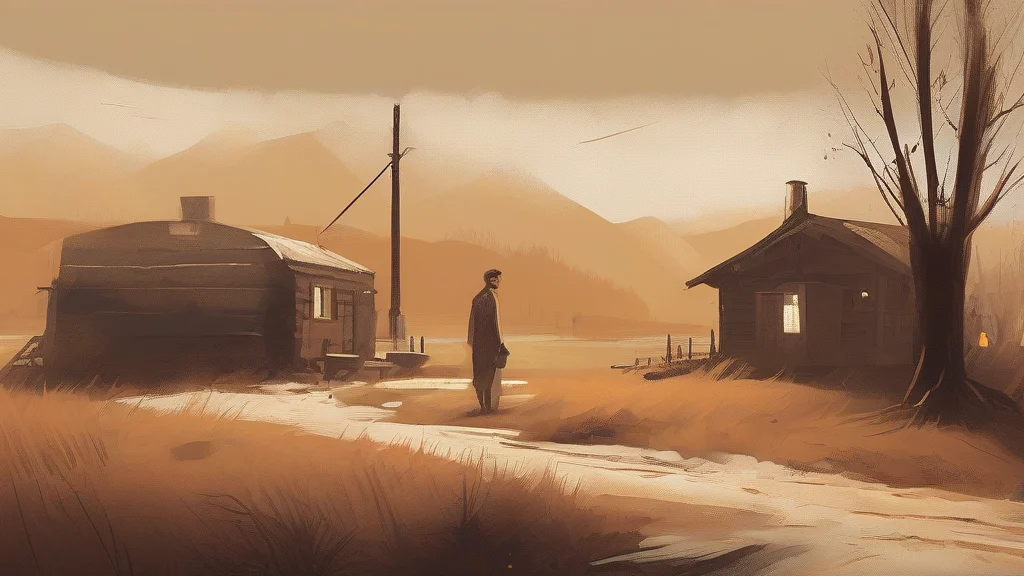
What does drabber mean?
Drabber is the comparative form of the adjective drab, used to describe something that is more dull, colourless, or lacking in brightness and interest than something else. It can refer to physical appearance — a drabber room, a drabber outfit, a drabber landscape — or extend metaphorically to experiences and circumstances, as in a drabber routine or a drabber chapter of life. The word carries a distinctly negative connotation, suggesting not merely plainness but a depressing absence of colour, variety, or vitality. It appears naturally in comparisons, often intensified by words like "far," "even," or "considerably." The underlying adjective drab derives its name from an old type of undyed, yellowish-brown woollen cloth, which gives the word a tangible historical texture: to be drab is literally to resemble unbleached fabric. Drabber is a straightforward, widely understood comparative that adds precision when describing degrees of dullness in everyday speech and writing.
adjective (comparative form)The comparative form of the adjective "drab," meaning more dull, colorless, or lacking in brightness and interest than something else.
- More dull, colorless, or uninteresting in appearance than something else (comparative of drab).
- More cheerless, monotonous, or lacking in excitement than something else, applied to moods, lives, or situations.
"The renovated lobby looked even drabber than before, all grey carpet and flickering fluorescent light."
"After the autumn leaves fell, the street looked drabber than ever."
"He found his new job in accounts even drabber than the one he had left."
"Drab" once referred to a specific dull yellowish-brown cloth — so calling something drabber was originally a judgment about fabric, not just mood.
Reviewed by Deb Chak, Editor. AI-assisted content curated by RJS Tech Solutions LLP.
Etymology of drabber
Drabber derives from drab, which entered English in the early sixteenth century as the name of a coarse, undyed woollen cloth of a dull brownish-yellow colour. The adjective sense of drab, meaning dull or colourless, developed from this fabric name by the late seventeenth century, and the regular comparative suffix -er produced drabber. The ultimate origin of the cloth term itself is uncertain, though it may relate to similar words in other European languages for undyed fabric.
Related word forms
How drabber is actually used
Drabber is the standard comparative of drab; "more drab" is also acceptable but less common. It carries an unambiguously negative connotation of visual or experiential dullness and fits both formal and informal registers.
Easily confused with drabber
A draper is a person who sells cloth or fabrics, while drabber describes something more dull or colorless.