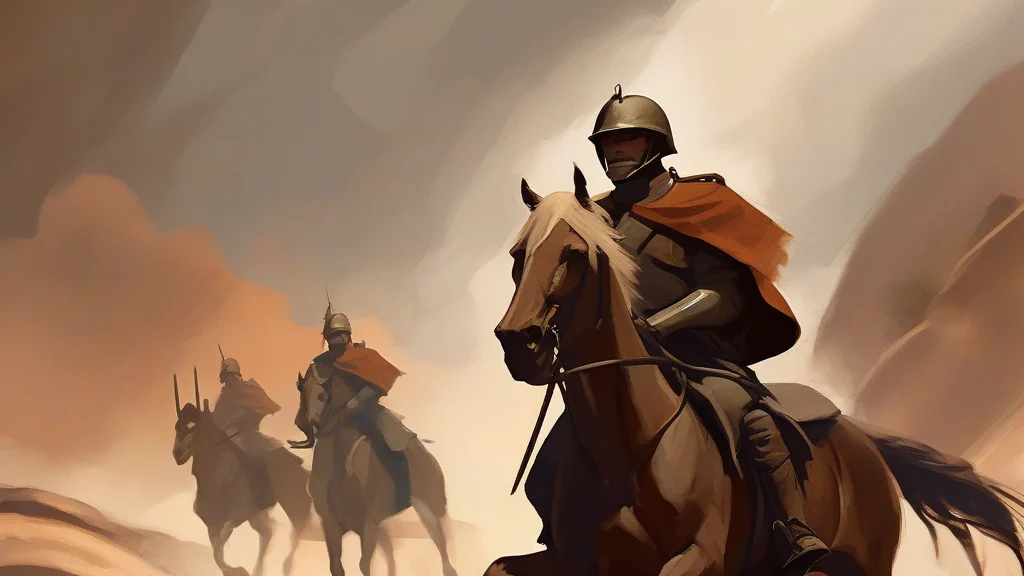
What does dragoon mean?
A dragoon was originally a type of soldier in European armies — typically a member of a unit that travelled and fought on horseback but could also dismount to fight on foot, combining the mobility of cavalry with the flexibility of infantry. The term dates back to the early seventeenth century and derives from 'dragon', a name given to the short muskets these soldiers carried, which were said to breathe fire when fired. Famous units such as the British Dragoon Guards carried the title well into modern times. Today the noun survives mostly as a historical term, but the word has taken on a lively second life as a verb: to dragoon someone means to pressure or strong-arm them into doing something they would rather not do. This verbal use carries a distinctly negative connotation, suggesting coercion rather than persuasion, and appears frequently in phrases such as 'dragooned into' signing, voting, or attending.
A soldier in a European cavalry unit trained to fight both mounted and on foot.
"The light dragoons charged down the slope with sabres drawn."
Primarily historical; refers to British, French, and other European regiments from roughly the seventeenth to nineteenth centuries.
To force or coerce someone into doing something against their will.
"He was dragooned into giving yet another speech at the annual dinner."
Standard plural for both the noun sense (the soldiers) and any countable uses of the word.
"Two squadrons of dragoons were stationed along the border."
Dragoons were named after the 'dragon' muskets they carried — the weapon spat fire like the legendary beast.
Reviewed by Deb Chak, Editor. AI-assisted content curated by RJS Tech Solutions LLP.
Etymology of dragoon
The word dragoon entered English in the early seventeenth century from French dragon, which referred to a type of short, carbine-like firearm carried by these troops — so called because it 'breathed fire' like the legendary beast. The French noun itself derives from Latin draco, meaning dragon or serpent. Over time the name transferred from the weapon to the soldiers who wielded it, and later still gave rise to the figurative verb meaning to coerce, presumably evoking the forceful, intimidating manner of the original troopers.
How dragoon is actually used
The noun sense is largely historical, referring to European (especially British and French) regiments from the 17th to 19th centuries. The verbal sense is figurative and often implies reluctance on the part of the person being coerced.
Easily confused with dragoon
A dragon is a mythical fire-breathing creature, while a dragoon is a mounted infantry soldier; the two words are etymologically related but entirely different in meaning.