What does draisine mean?
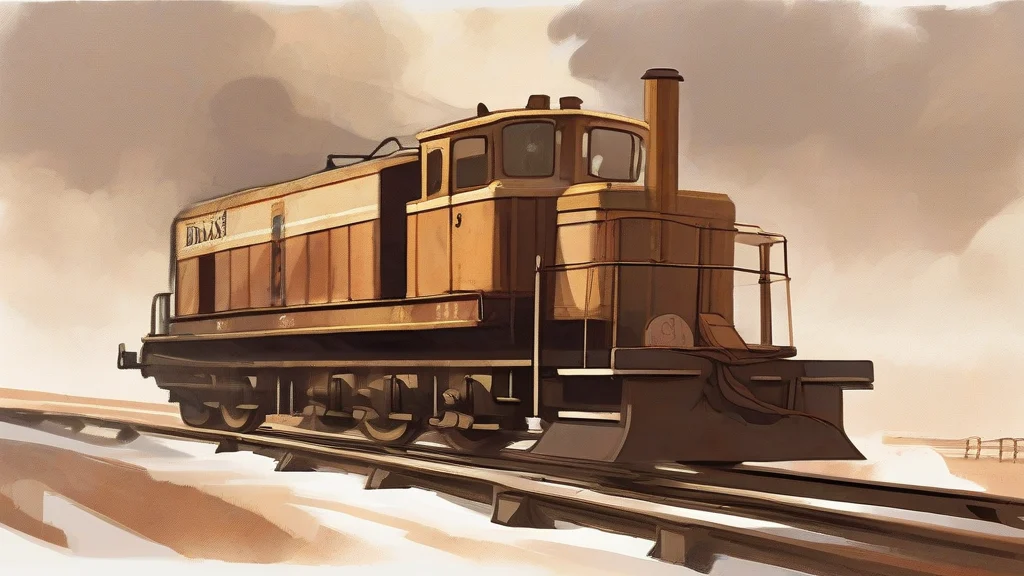
A draisine is a small, lightweight vehicle designed for travel on railway tracks, used primarily by maintenance crews to inspect rails, ties, and signals. Early draisines were hand-powered, propelled by pumping handles much like a handcar, while modern versions are typically small motorized cars equipped with flanged wheels that keep them firmly on the rails. The word carries a second, historical meaning: it names the running machine invented around 1817 by the German baron Karl von Drais, a pedal-less, two-wheeled contraption that riders propelled by pushing their feet against the ground — widely regarded as the ancestor of the bicycle. Today the term belongs mostly to the specialized vocabulary of railways and transport history. Its dual identity makes it an interesting word, linking the humble track-inspection trolley directly to one of the great milestones in personal mobility.
A small light railway vehicle, hand-powered or motorized, used for track inspection and maintenance.
"The crew rolled the draisine onto the siding once the inspection was complete."
This is the dominant modern sense.
Historically, the pedal-less two-wheeled running machine invented by Karl von Drais circa 1817, an early precursor of the bicycle.
"Museum curators restored a replica draisine to demonstrate how early riders steered with their feet."
Chiefly found in historical writing about the origins of the bicycle; also called a draisienne or dandy horse.
Regular plural formation.
"Two draisines were stationed at either end of the tunnel for emergency inspections."
Before bicycles had pedals, riders scooted along with their feet — and the machine they rode was named after its inventor, Baron Karl von Drais: the draisine.
Reviewed by Deb Chak, Editor. AI-assisted content curated by RJS Tech Solutions LLP.
Etymology of draisine
The word derives from the name of Karl von Drais, the German inventor who built his celebrated running machine in 1817; the term entered English via French 'draisienne'. Originally applied to Drais's two-wheeled hobbyhorse itself, it was later transferred to small hand- or motor-powered vehicles used for railway inspection. Its closest relative is the French 'draisienne', which retains the earlier sense of the pedalless precursor of the bicycle.
How draisine is actually used
In everyday modern usage, 'draisine' most often refers to a small railway maintenance vehicle; the historical sense relating to Drais's running machine is chiefly encountered in histories of cycling and transport. The word has a technical, somewhat specialist register.
Easily confused with draisine
A draisienne is the early 19th-century push-along hobbyhorse bicycle itself, while a draisine in modern usage is a small vehicle for inspecting railway tracks.