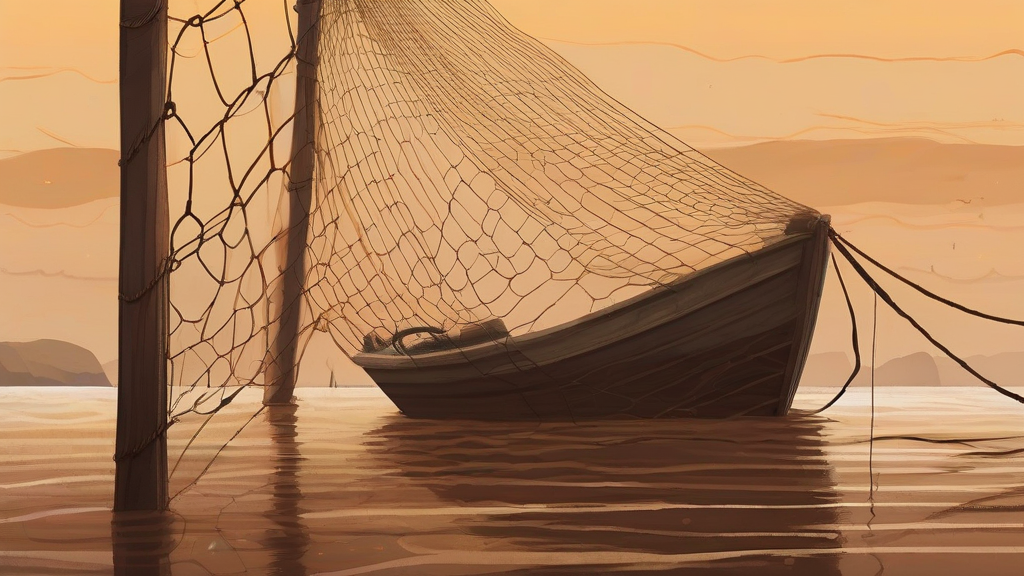
What does driftnet mean?
A driftnet is a type of fishing net designed to hang vertically in the water like a curtain, with its top edge buoyed by floats and its bottom edge weighted, so that it drifts freely with tides and currents rather than being anchored or towed. Fish swimming into the net become entangled, usually by their gills, which is why driftnets are classified as gillnets. Traditionally used for catching herring, salmon, and tuna, driftnetting became controversial in the late twentieth century when fleets deployed nets stretching many kilometres, earning them the grim nickname 'walls of death' because of the vast unintended catch of dolphins, turtles, and seabirds. As a result, the United Nations called for a moratorium on large-scale high-seas driftnetting in 1992, and many nations have since banned or tightly restricted the practice. Today the word appears most often in environmental journalism, fisheries regulation, and maritime history.
nounA large fishing net that hangs vertically in the water, typically suspended from floats, and is allowed to drift with the current rather than being anchored, entangling fish by their gills as they swim into it.
- A large vertical fishing net left to drift with the current, which catches fish by entangling their gills.
"The trawler deployed its driftnet at dusk, letting the current carry it across the migration route of the tuna."
"Conservation groups welcomed the new law banning driftnet fishing in coastal waters."
"In the days of sail, herring fishermen would set a driftnet from an open boat and wait through the night."
Standard plural; used both for multiple physical nets and, collectively, for the fishing method or industry.
"The coast guard seized several illegal driftnets during the patrol."
Driftnets can stretch for miles — some so long they were nicknamed 'walls of death' before international bans began curbing their use in the 1990s.
Reviewed by Deb Chak, Editor. AI-assisted content curated by RJS Tech Solutions LLP.
Etymology of driftnet
The word driftnet is a straightforward English compound formed from 'drift', referring to the way the net is left to float with the current rather than being fixed, and 'net'. The element 'drift' derives from Old English 'driftan', meaning 'to drive or float', giving the compound transparent Germanic roots. Drift-netting was well established in European herring fisheries by at least the early modern period, though the exact date the compound first appeared in print is uncertain. Related forms include 'drifter', the term for the boats that fished in this manner.
How driftnet is actually used
The word often carries negative environmental connotations because large-scale driftnetting can unintentionally catch dolphins, turtles, seabirds, and other non-target species (bycatch), leading to widespread legal restrictions. It is used mainly in fishing industry, maritime, and conservation contexts.
Easily confused with driftnet
A driftnet is specifically a gillnet that is left to drift free with the current, whereas a gillnet may also be anchored or fixed in place.