
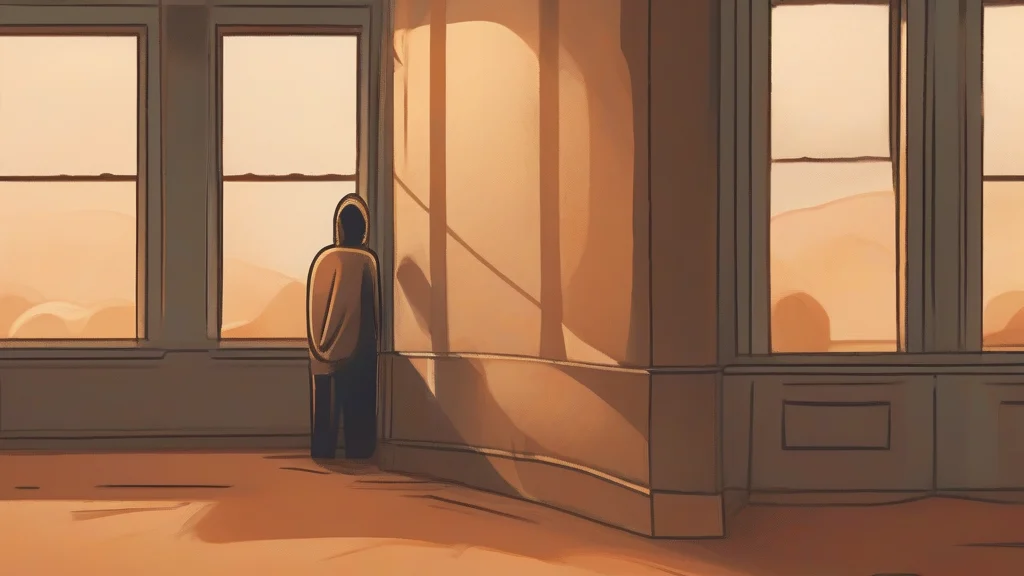
What does drooped mean?
"Drooped" is the past tense and past participle of the verb "droop," meaning to bend, hang, or sag downward, typically because something lacks the strength, moisture, stiffness, or support to stay upright. A thirsty plant droops in the sun, heavy eyelids droop toward sleep, and a discouraged person's shoulders droop under bad news. By extension, it can describe anything that declines gradually in vigor or quality, as when someone's enthusiasm or health droops over time. The word carries a distinctly languid, often melancholy connotation: it suggests weariness, dejection, or surrender rather than sudden collapse. It appears comfortably in both everyday speech and literary prose, frequently paired with body parts, plants, and figurative descriptions of flagging spirits. Its close association with visible signs of fatigue makes it a vivid, economical choice for writers who want to show exhaustion or sadness rather than simply state it.
verb (past tense and past participle of 'droop')Past tense and past participle of 'droop': to bend, hang, or sag downward from weakness, exhaustion, sadness, or lack of support; also, to decline gradually in strength or vitality.
- (of a plant, flower, or part of the body) to bend or hang downward limply, especially from heat, thirst, weight, or lack of strength.
- (of a person's posture, head, shoulders, or spirits) to slump or sag as a sign of tiredness, dejection, or defeat.
- (figurative) to decline gradually in energy, vigor, or quality.
"The flowers had drooped in the midday heat."
"After a week without water, the seedlings drooped over the edge of the pot."
"His shoulders drooped as he read the rejection letter a second time."
The same limp little syllable that describes wilting flowers also describes your eyelids at 3 p.m. — English has one word for everything that gives up fighting gravity.
Reviewed by Deb Chak, Editor. AI-assisted content curated by RJS Tech Solutions LLP.
Etymology of drooped
"Droop" first appeared in English in the late Middle Ages, attested from around the early 15th century. It is generally considered an alteration or variant form of the older verb "drop" (Middle English "dropen"), with the vowel change reflecting a common pattern of expressive sound variation. It belongs to the same Germanic family of words as "drop," "drip," and "dribble," all evoking downward motion or heaviness. The word has remained stable in form and meaning since its earliest recorded use, with "droopy" emerging later as its natural adjectival derivative.
Related word forms
How drooped is actually used
Register is neutral to slightly literary; common in both everyday description and fiction. Often used figuratively for posture and mood ('her spirits drooped'), which lends the word a gently melancholic connotation.
Easily confused with drooped
'Druped' relates to a drupe (a fleshy fruit like a peach) in botanical contexts, whereas 'drooped' means to bend or hang downward.
'Droopy' is the adjective meaning hanging down limply, while 'drooped' is the past-tense verb form describing the act of sagging.