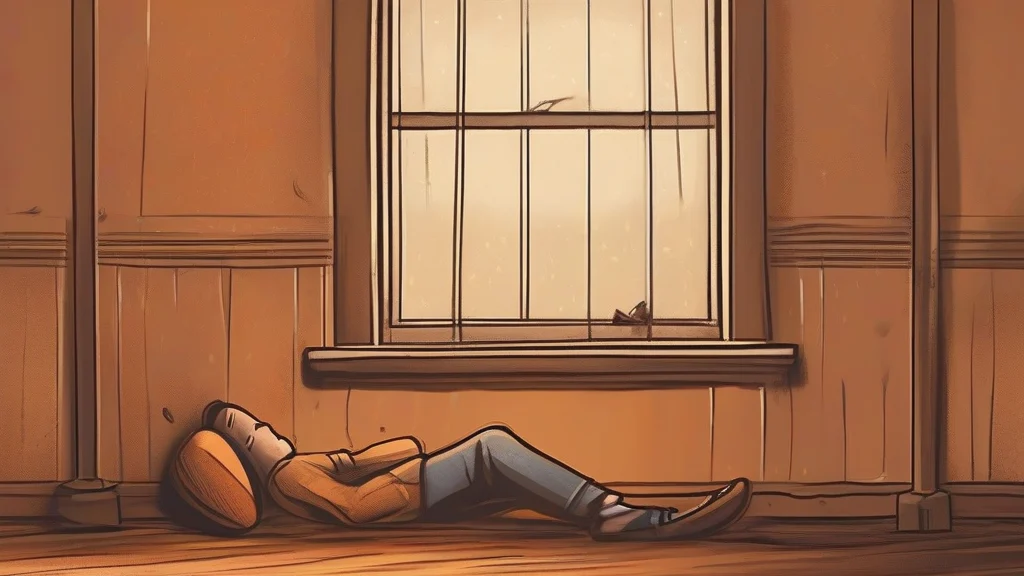
What does droopiness mean?
Droopiness is the quality or state of drooping — that is, of hanging, bending, or sagging limply rather than standing firm or upright. It applies most naturally to physical things: flowers wilting in the heat, leaves weighed down by rain, fabric pooling on the floor, or the ears and tail of a tired dog. By extension it can describe a person's weary or dejected carriage, as when exhaustion shows in the droopiness of one's shoulders or eyelids. Formed from the adjective "droopy" plus the suffix "-ness," the word carries a mild, often sympathetic connotation rather than a harshly critical one, suggesting fatigue, neglect, or the effects of time and weather. Though less common than its parent adjective, droopiness is a useful, vivid noun for naming that unmistakable look of things — and people — that have lost their spring.
The state of hanging or bending limply; a sagging or wilted condition.
"The florist trimmed away the stems whose droopiness could not be reversed by fresh water."
Most often used of plants, flowers, fabric, and animal features such as ears.
A tired or dispirited carriage of the head, eyes, or posture.
"The coach noticed the droopiness in his players after three games in five nights."
Rarely used in the plural, as the word normally functions as an uncountable mass noun denoting a state or quality.
"The botanist catalogued the various droopinesses afflicting the greenhouse specimens."
Droopiness is what your houseplants, your posture, and your Monday motivation all have in common.
Reviewed by Deb Chak, Editor. AI-assisted content curated by RJS Tech Solutions LLP.
Etymology of droopiness
Droopiness is formed within English from the adjective "droopy" combined with the noun-forming suffix "-ness." "Droopy" derives from the verb "droop," which entered Middle English around the fifteenth century, likely borrowed from Old Norse "drúpa," meaning to hang the head. The same Germanic root lies behind related words such as "drop" and "drip," giving the whole family a shared sense of downward movement.
Related word forms
How droopiness is actually used
Informal to neutral in register; more common in descriptive or conversational writing than in formal prose. Often applied to plants, flowers, and pets, and figuratively or literally to human posture and expression. The adjective "droopy" is considerably more frequent than the noun.
Easily confused with droopiness
Drowsiness means sleepiness or a tendency to fall asleep, while droopiness describes the physical sagging or limpness of something — though a drowsy person may show droopiness.