
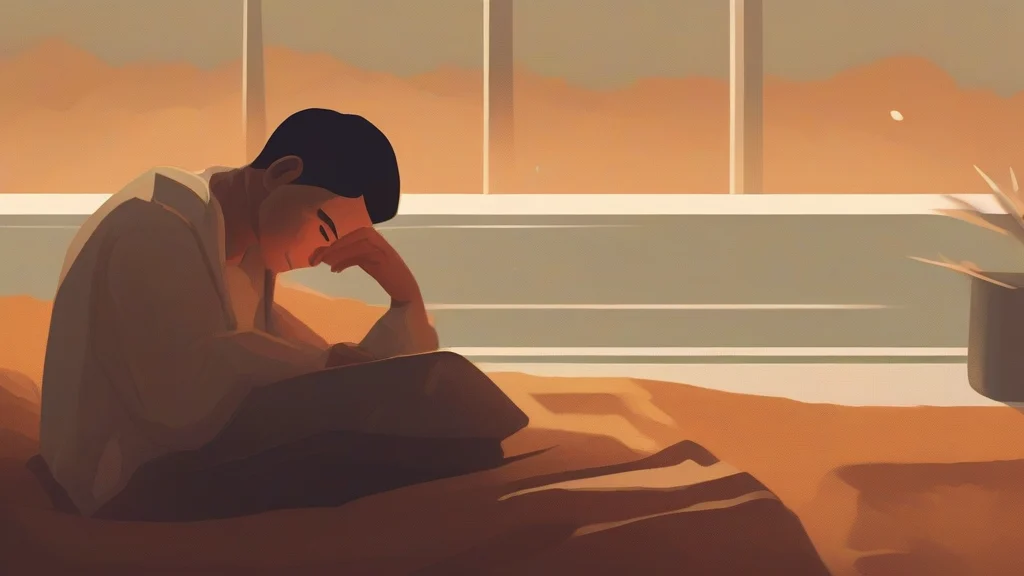
What does drowsiest mean?
Drowsiest is the superlative form of the adjective drowsy, meaning the most sleepy or nearest to falling asleep. It can describe people — a child at her drowsiest before bedtime — or, by extension, places and times that feel heavy with stillness, such as the drowsiest stretch of a hot summer afternoon. Because it is a comparative superlative, it typically appears either in explicit comparisons among several things or in the idiomatic pattern 'at its/his/her drowsiest', marking a peak of sleepiness. The word carries a gentle, often cozy connotation rather than a clinical one; writers favor it for its soft sound and evocative rhythm. Its figurative use for sluggish atmospheres is somewhat literary, giving prose a languid, unhurried flavor. It derives from drowsy, whose origins trace back to Old English.
Most sleepy; most inclined to fall asleep.
"He was at his drowsiest during the long sermon."
Often used in the pattern 'at one's drowsiest' to indicate a peak state.
(Of a place, atmosphere, or time) Most quiet, sluggish, or soporific in character.
"The harbor town was at its drowsiest in late October."
English has no single common adjective for 'most awake' that matches how neatly 'drowsiest' pins down the exact moment sleep wins.
Reviewed by Deb Chak, Editor. AI-assisted content curated by RJS Tech Solutions LLP.
Etymology of drowsiest
Drowsiest is formed from drowsy by adding the regular English superlative suffix -est. Drowsy itself derives from the verb drowse, which comes from Old English drūsian, meaning to sink or become languid. The word has been part of everyday English for many centuries, and the superlative follows standard adjectival inflection.
Related word forms
How drowsiest is actually used
Strictly the superlative degree of 'drowsy', so it implies comparison among three or more things or a peak state ('at its drowsiest'). The literal sense (sleepy) is more common than the extended sense describing sleepy-seeming places or moods, which is largely literary.
Easily confused with drowsiest
'Drowsy' means sleepy and half-asleep, while 'dazed' means confused or stunned, as after a blow.
'Droopy' describes something sagging or wilting, whereas 'drowsy' specifically means sleepy.