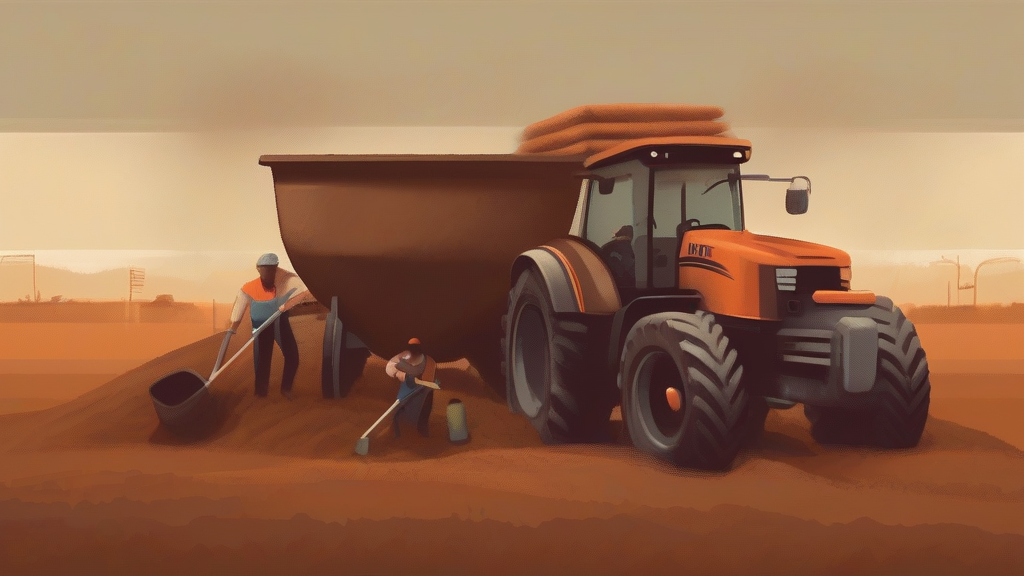
What does dunging mean?
Dunging is the practice of spreading animal manure over fields or crops to enrich the soil and improve harvests. It is the present participle and gerund of the verb 'to dung', a word rooted in Old English that once served as the standard agricultural term for fertilizing land. In centuries before artificial fertilizers were developed, dunging was central to farm life: livestock were kept not only for meat and milk but for the manure they produced, and the annual round of carting and spreading it shaped the farming calendar. Today the word survives mainly in rural, historical, and technical agricultural contexts, especially in Britain, where terms like 'dunging the fields' still appear. Though largely displaced by 'manure' and 'fertilize', it retains a vivid, earthy quality that connects modern readers directly to the realities of pre-industrial husbandry.
Present participle of 'to dung': applying manure to land or crops as fertilizer.
"They were out early, dunging the potato patch before the rains came."
Chiefly British and traditional agricultural register.
The action or practice of manuring land.
"Regular dunging kept the heavy clay soil productive."
Used as an uncountable verbal noun.
Before chemical fertilizers existed, entire farming calendars revolved around one humble task: dunging the fields.
Reviewed by Deb Chak, Editor. AI-assisted content curated by RJS Tech Solutions LLP.
Etymology of dunging
The word derives from the Old English verb 'dyngan' (to manure), formed on the noun 'dung', meaning excrement used as fertilizer. This root traces back to Proto-Germanic, and cognates survive in other Germanic languages, such as German 'Düngung' meaning manuring or fertilization. The term has been part of English agricultural vocabulary since the medieval period, though its everyday use has declined since the introduction of commercial fertilizers.
Related word forms
How dunging is actually used
'Dunging' belongs chiefly to traditional and agricultural registers, and appears most often in British rural writing and historical accounts of farming. The verb 'to dung' has largely been replaced in modern usage by 'manure' or 'fertilize', so 'dunging' now carries a slightly old-fashioned, rustic flavor.
Easily confused with dunging
While 'dunging' refers to fertilizing soil with manure, 'dunning' means persistently demanding payment of a debt.