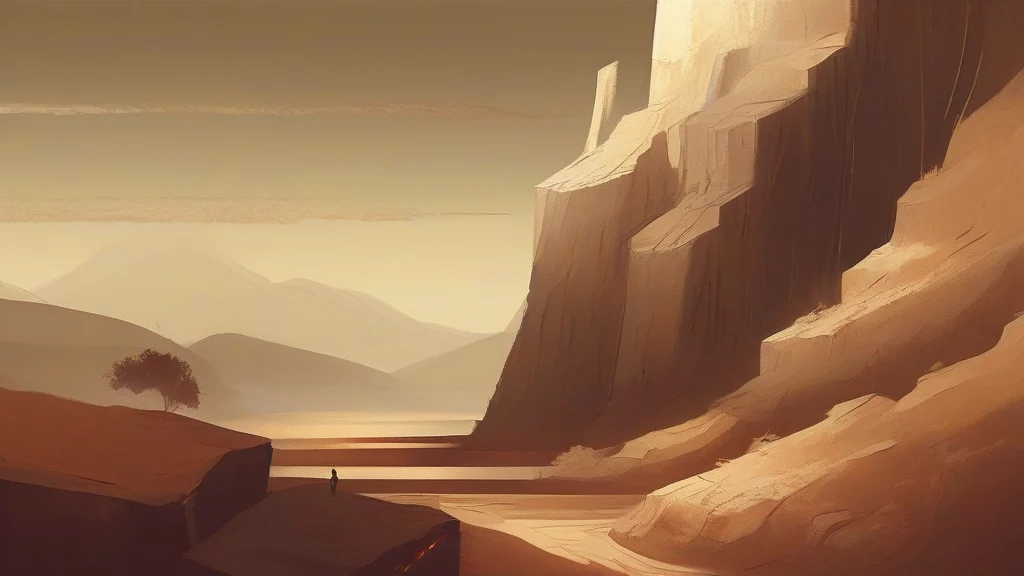
What does dwarfed mean?
"Dwarfed" is the past tense and past participle of the verb "to dwarf," meaning to make something appear very small or insignificant by comparison with something far larger. It can be used literally, as when a mountain range dwarfs nearby hills, but in contemporary English it appears overwhelmingly in figurative contexts: a charity's donations may be dwarfed by corporate contributions, or an athlete's early achievements dwarfed by later ones. The word most commonly occurs in the passive construction "dwarfed by" or "dwarfed by comparison," a staple of journalism, economics, and descriptive prose for expressing dramatic disparities of scale. A secondary, now rarer sense refers to stunting growth, as poor conditions may leave a plant dwarfed. Derived from the ancient Germanic root behind "dwarf," the word carries connotations of imbalance and disproportion rather than outright criticism, making it a precise, neutral tool for writers describing anything overwhelmed by sheer size.
Past tense and past participle of "dwarf": caused to appear very small or insignificant by comparison.
"Her early novels were eventually dwarfed by the success of her final work."
Appearing unusually small, especially as a result of being overshadowed or stunted.
"The cottage looked dwarfed beneath the towering cliffs."
Before Disney, English speakers couldn't even agree how to spell its plural — Tolkien insisted on "dwarves," calling the dictionary's "dwarfs" an unfortunate historical mistake.
Reviewed by Deb Chak, Editor. AI-assisted content curated by RJS Tech Solutions LLP.
Etymology of dwarfed
"Dwarfed" derives from "dwarf," which comes from the Old English "dweorg" or "dweorh," tracing back through Proto-Germanic to a root shared with Old Norse "dvergr" and German "Zwerg." In Germanic mythology, dwarfs were small, subterranean craftsmen, and the verb developed from this association with diminutive stature. The figurative sense of making one thing seem small beside another emerged in English by the seventeenth century and has since become the dominant usage.
Related word forms
How dwarfed is actually used
Almost always used figuratively in modern English, typically in the passive ("was dwarfed by"), often in journalism and descriptive writing to convey scale. The literal horticultural sense (stunting growth) is now less common, largely replaced by "stunted." Neutral register; carries no inherent negativity beyond the implication of relative smallness.
Easily confused with dwarfed
"Dwarves" is the plural noun for the mythical beings or people with dwarfism, while "dwarfed" is the verb form meaning made to look small.