What does ectozoa mean?
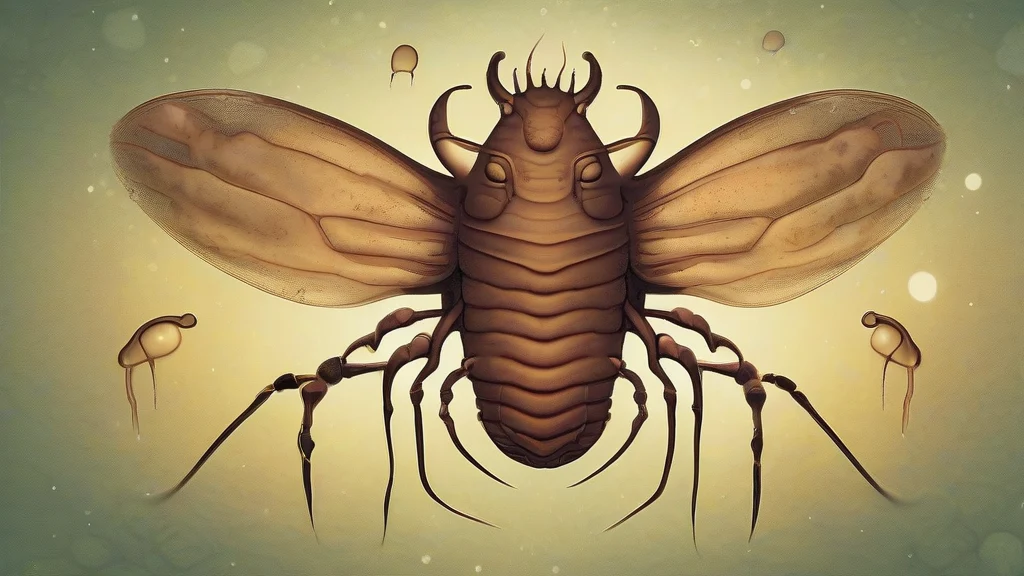
Ectozoa are organisms that make their home on the outer surface of another animal's body, a group that includes familiar external parasites such as lice, fleas, mites, and ticks. The word is the plural of ectozoon and comes from the Greek roots ektos, meaning 'outside', and zōion, meaning 'animal'. It stands in contrast to endozoa, organisms that inhabit a host's interior. Found chiefly in zoological, veterinary, and parasitological literature, the term carries a clinical, scientific register rather than everyday usage, where phrases like 'external parasites' or 'skin parasites' are more common. Studying ectozoa matters practically as well as academically: infestations can transmit disease, cause irritation and blood loss, and affect livestock productivity. For readers interested in biology, the word offers a precise, compact way to describe life on a host's surface.
nounOrganisms that live on the outer surface of another living creature, especially ectoparasites such as lice, fleas, and ticks. Ectozoa is the plural form; the singular is ectozoon.
- Organisms, especially parasitic ones, that live on the external surface of an animal's body.
"The veterinarian examined the badger's fur for ectozoa before releasing it back into the wild."
"The ornithologist catalogued the ectozoa found among the feathers of migratory seabirds."
"Heavy infestations of ectozoa can cause anaemia and skin irritation in livestock."
Ectozoa is itself the plural of the rarer singular form ectozoon, which takes the regular plural ending -a after Latin/Greek convention.
"The hide was teeming with ectozoa, from burrowing mites to blood-feeding flies."
Every flea, louse, and tick on your pet belongs to a scientific category literally named 'outside-animal' — coined from Greek roots over 150 years ago.
Reviewed by Deb Chak, Editor. AI-assisted content curated by RJS Tech Solutions LLP.
Etymology of ectozoa
Ectozoa derives from ancient Greek: ektos ('outside') combined with zōion ('animal'), the same root that gives English words like zoo and protozoa. The term was formed on the model of entozoa (organisms living within a body) during the nineteenth century, when naturalists were systematically classifying parasitic life. Its cognates include ectozoon (the singular), ectozoic (adjective), and related formations such as ectoplasm and ectoderm.
Related word forms
How ectozoa is actually used
A technical term used mainly in zoology, veterinary medicine, and parasitology; it is almost always encountered in formal or scientific writing and appears predominantly in its plural form.
Easily confused with ectozoa
Endozoa are organisms that live inside a host's body, whereas ectozoa live on its external surface.
Protozoa are single-celled microorganisms; ectozoa are organisms living on the outside of a host, regardless of their structure.