What does elderberry mean?
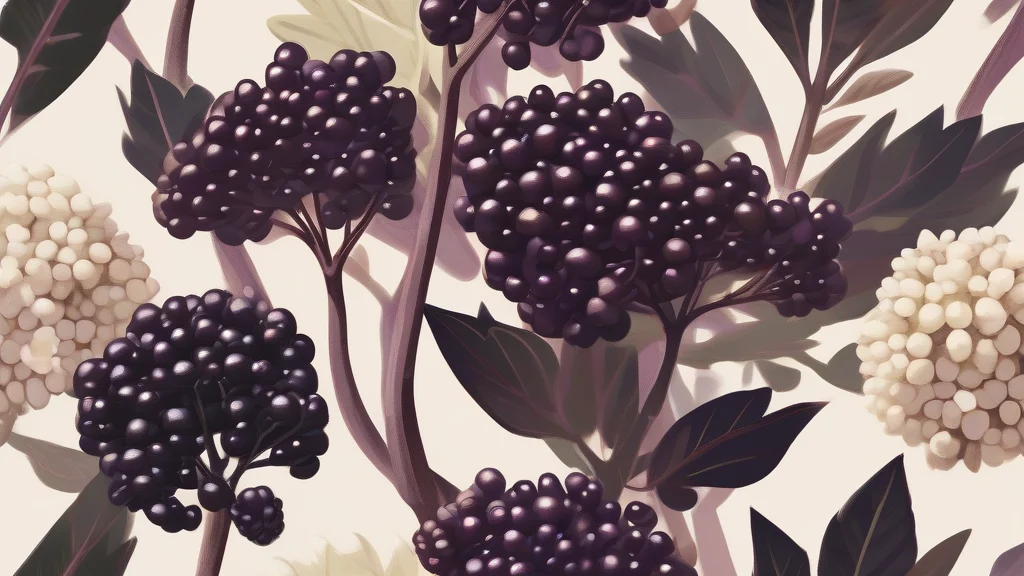
Elderberry is a noun referring both to the dark purple-black berry of the elder tree (genus Sambucus) and, by extension, to the shrub or small tree that produces it. Native to Europe and North America, the elder bears flat-topped clusters of tiny white flowers in early summer that ripen into dense bunches of small berries by late summer. Elderberries are rarely eaten raw — uncooked berries contain mildly toxic compounds — but cooked, they are prized for jams, jellies, pies, wine, and especially syrup, long valued in European folk medicine as a remedy for coughs and colds. The word carries rustic, hedgerow, and old-world connotations, evoking cottage gardens and homemade preserves. In Britain the tree is often simply called "elder," while North Americans more often say "elderberry." It remains a familiar word in culinary, herbalist, and gardening circles alike.
nounA deciduous shrub or small tree of the genus Sambucus, bearing clusters of small white flowers and dark purple to black berries, or the berry of this plant itself.
- The dark purple to black berry of the elder tree (Sambucus), used in wines, syrups, jams, and traditional remedies.
- The elder shrub or small tree itself.
"She simmered the elderberries with sugar and lemon to make a deep-purple syrup for winter colds."
"The hedgerow was heavy with clusters of ripe elderberry in late summer."
"A spoonful of elderberry syrup is a folk remedy still sold in most pharmacies today."
Standard plural, used when referring to multiple individual berries or multiple plants.
"She froze the elderberries until she had enough for a batch of jam."
Elderberries have been called 'the medicine chest of the people' — but eat them raw and you'll regret it: uncooked berries contain compounds that can make you seriously ill.
Reviewed by Deb Chak, Editor. AI-assisted content curated by RJS Tech Solutions LLP.
Etymology of elderberry
Elderberry combines "elder," the name of the Sambucus tree, with "berry." "Elder" derives from Old English "ellen" or "ællern," meaning the elder tree, a word of Germanic origin unrelated to "elder" meaning older person. The compound "elderberry" is attested from at least the Middle English period and remains the standard English name for both the fruit and the plant in many regions.
How elderberry is actually used
Mostly used in culinary, herbal-medicine, and gardening contexts. The berries must be cooked before eating, as raw elderberries contain cyanogenic glycosides. In British English, "elder" is more commonly used for the tree itself, while American English favors "elderberry" or "elderberry bush."
Easily confused with elderberry
"Elder" can refer to the same shrub (Sambucus) but also means an older person or a church official, whereas "elderberry" refers specifically to the plant's berry or the shrub itself.
Blackcurrants are smaller, glossier berries from the genus Ribes used similarly in syrups and jams, but they come from an entirely different plant than elderberry.