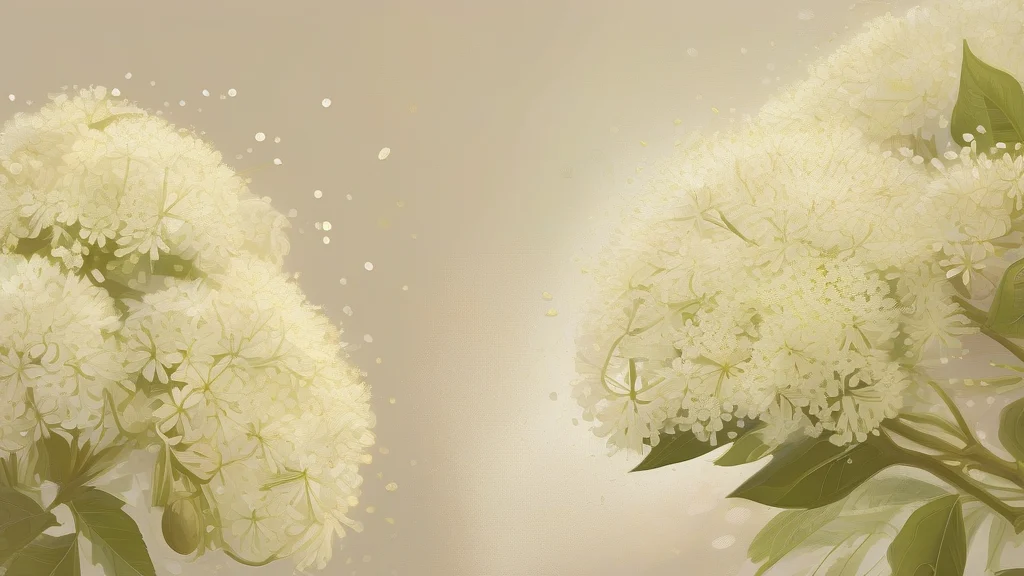
What does elderflower mean?
An elderflower is the small, creamy-white blossom of the elder tree (Sambucus nigra), produced in broad, flat-topped clusters in late spring and early summer. Each cluster contains dozens of tiny five-petalled flowers with a delicate, muscat-like fragrance that has made the blossom a prized ingredient for centuries, particularly in Britain and northern Europe. Elderflowers are most famously infused in sugar syrup to make elderflower cordial, but they are also fermented into sparkling wines and champagne-style drinks, added to jams and jellies, and dipped in batter and fried as fritters. Because the flowers are highly perishable once picked, they are traditionally gathered on a dry, sunny day and used quickly. In modern usage, the word appears chiefly in culinary contexts — menus, recipes, and soft-drink labelling — where 'elderflower' signals a light, floral, summery flavour. The word is more common in British than American English, reflecting the drink traditions of the former.
nounThe creamy-white flower of the elder tree, borne in flat clusters and traditionally used to flavour cordials, wines, and desserts.
- A single small white flower of the elder tree (Sambucus), one of many clustered on a broad flattened head.
- (collectively) The blossoms of the elder used as an ingredient in drinks, syrups, and food.
"She steeped the freshly cut elderflower heads in sugar syrup overnight to make cordial."
"The hedgerows were heavy with elderflower in early June."
"He ordered a chilled glass of elderflower pressé with his lunch."
Used when counting individual blooms or heads; uncountable 'elderflower' is common when referring to the ingredient in bulk or as a flavour.
"She rinsed the elderflowers gently to remove any insects before infusing them."
Every bottle of elderflower cordial begins with blossoms so delicate they must be picked within days of opening — the entire flavour of summer captured before it fades.
Reviewed by Deb Chak, Editor. AI-assisted content curated by RJS Tech Solutions LLP.
Etymology of elderflower
The word elderflower is a straightforward compound of 'elder', the name of the tree, and 'flower'. 'Elder' itself descends from Old English 'ellærn' (or 'ellen'), meaning the elder tree, whose further origins are debated by etymologists; it has been part of English since the earliest records of the language. Compounds pairing plant names with 'flower' are a long-established English pattern, and elderflower is attested from at least the eighteenth century in writings on plants and domestic cookery.
How elderflower is actually used
Most often encountered in British English, where elderflower cordial is a traditional homemade summer drink. The word is typically used in culinary and botanical contexts rather than everyday conversation, and is frequently treated as a mass noun when referring to the harvested blossoms.
Easily confused with elderflower
Elderflower is the blossom of the elder tree, while elderberry is the small dark fruit that develops from those flowers.