What does flour mean?
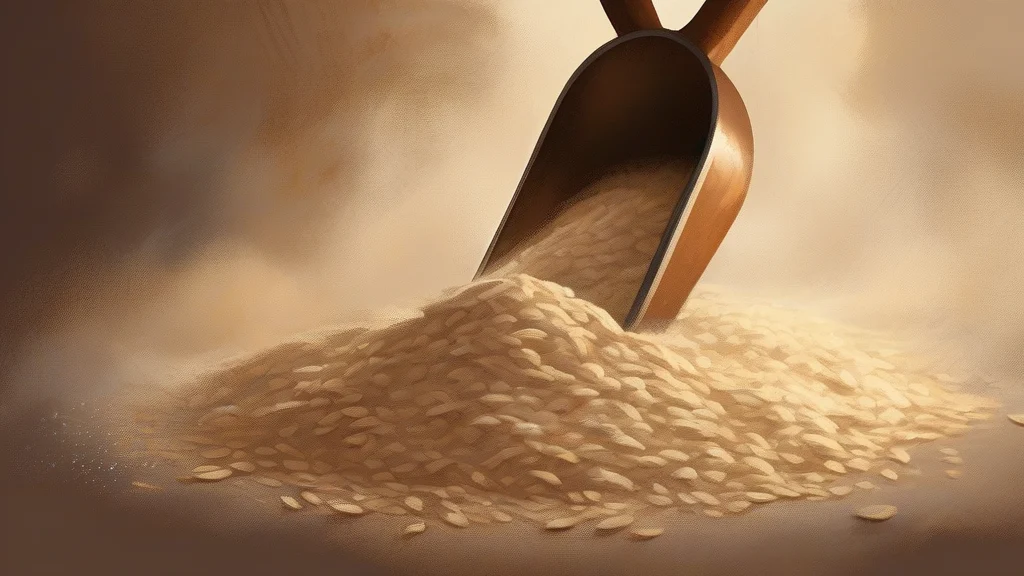
Flour is a fine powder obtained by grinding cereal grains, most commonly wheat, though it can be milled from rye, barley, rice, corn, chickpeas, and many other sources. It is one of humanity's oldest staple foods and remains the foundation of bread, pastry, pasta, and countless dishes across nearly every cuisine. In baking, its proteins interact with water to form gluten, which gives dough its elasticity and structure — a property that varies widely between high-protein bread flour and soft, low-protein cake flour. The word itself carries a charming history: it began as a spelling of 'flower', reflecting an old habit of calling the finest, whitest portion of milled grain the 'flower' of the meal. Today flour also functions as a verb, meaning to dust surfaces or ingredients with the powder, and appears in everyday kitchen phrases such as all-purpose flour and self-raising flour. Simple as it seems, flour quietly underpins much of what the world eats.
A fine powder made by grinding cereal grains, especially wheat, used in baking and cooking.
"Combine the flour, salt, and butter until the mixture resembles coarse crumbs."
Unless otherwise specified, 'flour' refers to wheat flour.
To coat or dust a surface, pan, or food with flour, typically to prevent sticking.
"Flour the work surface well before turning out the dough."
Usually uncountable when referring to the substance generally; the plural appears mainly when discussing different varieties or types of flour.
"The bakery stocks flours from several different mills."
The word 'flour' was originally just 'flower' — medieval bakers called the best part of the milled grain the 'flower' of the meal because it was as pure as a blossom.
Reviewed by Deb Chak, Editor. AI-assisted content curated by RJS Tech Solutions LLP.
Etymology of flour
The word 'flour' derives from Old French 'flor' or 'fur', ultimately from Latin 'flos' (stem 'flor-'), meaning flower. Medieval millers used 'flower' to name the choicest, finest part of the milled grain, and 'flour' emerged as an English spelling variant of that word, gradually becoming reserved for the powder itself while 'flower' kept the botanical sense. Its cognates include 'flower', 'flora', 'floral', and 'florist', all tracing back to the same Latin root.
Related word forms
How flour is actually used
In everyday speech, 'flour' almost always implies wheat flour unless another grain or source is specified. British usage favours 'plain' and 'self-raising' flour, while American usage typically says 'all-purpose' and 'self-rising'. The verb form ('to flour') means to dust a surface or food with flour.
Easily confused with flour
Flower refers to the blossom of a plant; flour is the ground powder made from grain — the two words share the same origin but diverged in meaning.