
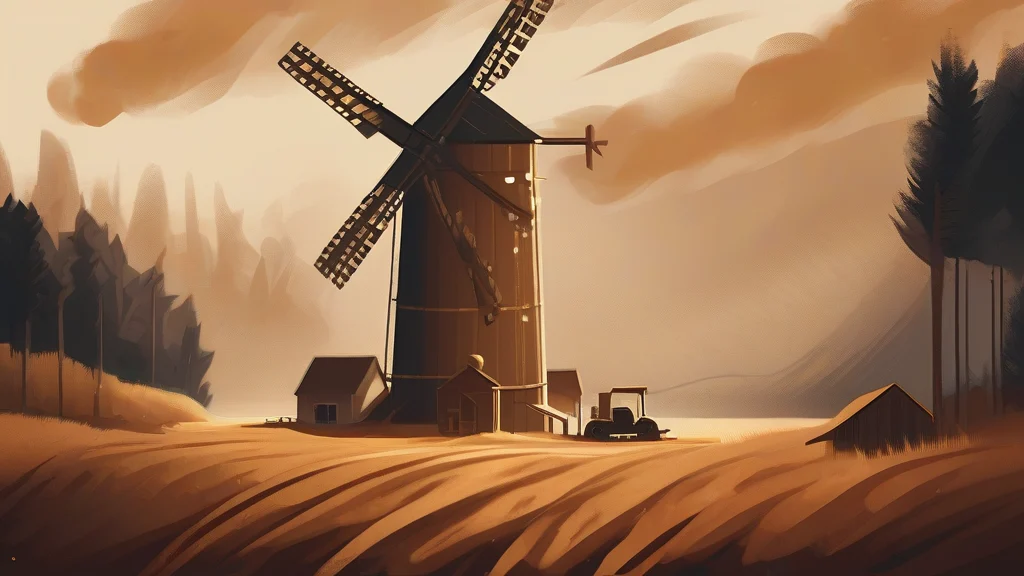
What does grist mean?
Grist originally means grain brought to a mill for grinding, usually wheat, corn, or another cereal. In its literal sense, it names the raw material from which flour or meal is produced, and the word is still used in milling, agriculture, and historical writing. Grist also has a figurative meaning: a useful resource, profitable product, or source of advantage. This sense is preserved in the familiar expression “all is grist to the mill,” which suggests that nothing is wasted because difficulties, setbacks, or unexpected circumstances can be turned to benefit. The word is therefore useful not only for discussing mills and grain but also for describing how a person or organization makes productive use of available material. Its old-fashioned idiom gives it a distinctive tone, while the literal sense remains clear and practical.
nounGrist is grain, especially wheat or corn, brought to a mill to be ground into flour or meal. By extension, it means something useful or profitable, as in the phrase “all is grist to the mill.”
- Grain, especially wheat or corn, to be ground into flour or meal.
- A useful or profitable product, resource, or advantage; a source of benefit or income.
"The miller was paid to turn the farmer's grist into flour."
"The miller inspected the grist before placing it in the hopper."
"For an enterprising publisher, even rejected manuscripts can be grist to the mill."
The plural is grammatically standard but uncommon, since grist is usually treated as a mass noun.
"The miller received several grists of grain from neighboring farms."
Grist is both the raw material of a mill and a reminder that even difficulties can become useful when put to the right purpose.
Reviewed by Deb Chak, Editor. AI-assisted content curated by RJS Tech Solutions LLP.
Where does grist come from?
The word descends from Old English grist, used for grain that was brought to a mill to be ground, and belongs to a Germanic word family reflected in forms such as Dutch grut, German Grieß, and Danish gryn. Its literal milling sense developed into the broader figurative idea of something useful or advantageous. The expression “all is grist to the mill” preserves the connection with milling while applying the word metaphorically to anything that can be turned to profit or advantage.
How grist is actually used
The literal agricultural sense is common in British and American English. The figurative sense is especially familiar in the traditional idiom “all is grist to the mill,” meaning that everything can be turned to someone's advantage; it can sound deliberately old-fashioned when used in casual speech.
Easily confused with grist
Grist means grain to be ground or something useful to a person or enterprise, whereas grit means small particles, determination, or a natural talent.