What does elder mean?
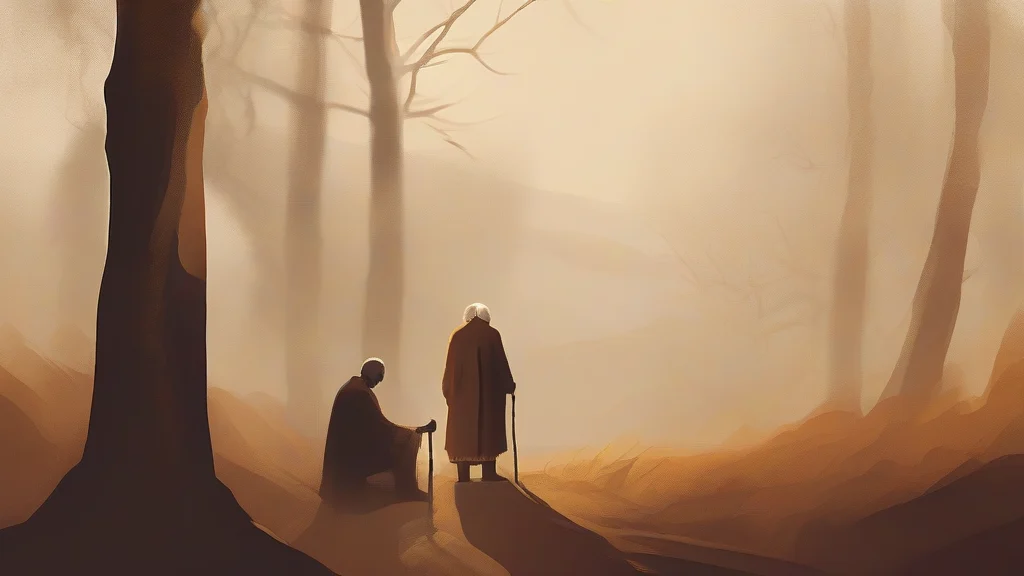
An elder is a person who is older than others, particularly one who commands respect on account of age, wisdom, or experience. The word carries strong connotations of honor and authority: in families we speak of an elder sibling, while in communities, tribes, and churches elders often hold formal positions of leadership and counsel. It also functions as an adjective meaning simply "older," as in an elder daughter, though this use is more formal than "older" and is confined to positions directly before a noun. A separate sense refers to the elder, a common shrub whose dark berries and creamy blossoms feature in wines, cordials, and folklore. Rooted in the Old English comparative of "old," elder preserves a grammatical form that English has otherwise abandoned — making it both a useful word and a linguistic curiosity.
A person of greater age or seniority, especially one holding a position of respect, wisdom, or authority in a family, community, or church.
"The elders deliberated long into the night before reaching a decision."
Often capitalized when referring to a specific church office (e.g., an Elder of the Presbyterian Church).
Older; of greater age, used only before a noun.
"His elder brother took over the family business."
A shrub or small tree of the genus Sambucus, with clusters of small white flowers and dark purple berries.
"Elder blossoms perfumed the hedgerow in early summer."
Etymologically unrelated to "elder" meaning an older person.
Regular plural; commonly used collectively to refer to a group of respected senior members of a community or family.
"The tribe's elders gathered to pass down their stories."
"Elder" is a fossil: it's the ancient comparative of "old," frozen in place so long that you can say someone is older than you — but never elder than you.
Reviewed by Deb Chak, Editor. AI-assisted content curated by RJS Tech Solutions LLP.
Etymology of elder
Elder descends from the Old English "ealdra," the comparative form of "eald" ("old"), tracing back through Proto-Germanic roots shared with German "alt" and Dutch "oud." While English later developed "older" as its regular comparative, "elder" survived as a fossilized comparative preserved chiefly in respectful and familial contexts. Its Germanic cousins include Scots "auld" and the archaic "eldritch," and the same root produced "alderman," originally a chief or senior man. The elder tree, despite its identical spelling, comes from an entirely different Old English word and is unrelated in origin.
Related word forms
How elder is actually used
"Elder" is somewhat formal and carries connotations of respect and deference, particularly when referring to community or religious leaders. As a comparative adjective it appears only attributively (an elder brother) and never predicatively or with "than" — use "older" instead. In American English, "elder" as a family comparative sounds slightly formal or literary compared with "older brother/sister." The tree sense is usually disambiguated by context ("elder tree," "elderflower") and is unrelated etymologically to the person sense.
Easily confused with elder
"Older" is the ordinary comparative used with "than" (she is older than me), while "elder" is restricted to attributive use before a noun (my elder sister) and cannot take "than."
The elder is also a shrub or small tree bearing clusters of black berries and fragrant white flowers — a completely separate sense from "elder" meaning an older person.