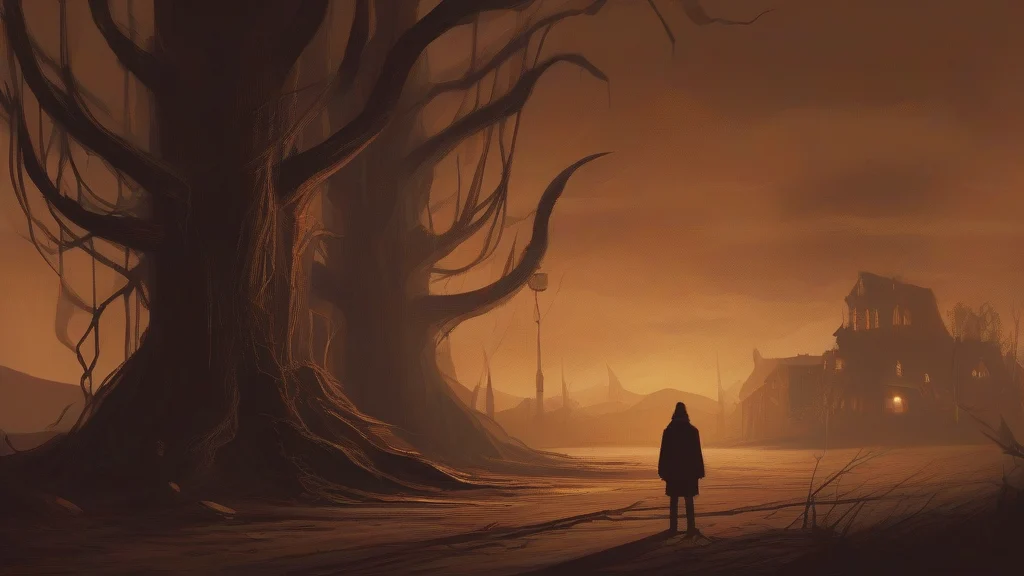
What does eldritch mean?
Eldritch is an adjective describing things that are eerie, uncanny, and otherworldly in a distinctly sinister way — so strange they seem to belong to a realm beyond nature. A sound can be eldritch, as can a landscape, a light, or a creature. The word entered English through Scottish usage in the sixteenth century and was used by poets such as Robert Burns before falling into relative obscurity. It was revived and immortalized by the early twentieth-century horror writer H.P. Lovecraft, whose tales of cosmic terror made "eldritch horror" a recognizable phrase, particularly in fantasy and science-fiction communities. Today eldritch appears mostly in literary and genre contexts, lending a deliberately archaic, Gothic flavor to descriptions of the supernatural. It suggests not just oddness but an ancient, unsettling wrongness — something that provokes instinctive dread rather than simple curiosity, making it far more evocative than plainer synonyms like strange or odd.
adjectiveEerie, uncanny, and otherworldly in a way that inspires dread; weird and sinister beyond the natural.
- Weird, eerie, and unsettling in a supernatural or otherworldly way; inspiring superstitious dread.
"An eldritch shriek echoed across the moor long after midnight."
"The cave was filled with an eldritch glow that seemed to pulse like a living thing."
"From the abandoned house came an eldritch wailing that made the villagers cross themselves."
H.P. Lovecraft loved this word so much that 'eldritch horror' became shorthand for an entire genre of cosmic terror — yet the word predates him by centuries and likely means something like 'elf-haunted.'
Reviewed by Deb Chak, Editor. AI-assisted content curated by RJS Tech Solutions LLP.
Etymology of eldritch
Eldritch comes from Scots, where it was current by the early sixteenth century. Its etymology is debated, but the leading theory derives it from Old English elements meaning 'elf' combined with a second element suggesting 'realm' or 'domain' — roughly 'of the elf-country,' hence uncanny and haunted. It spread from Scottish dialect into broader literary English, appearing in writers such as Robert Burns and Walter Scott, and gained modern fame largely through H.P. Lovecraft's fiction.
How eldritch is actually used
Literary and somewhat archaic in flavor; strongly associated with Gothic fiction, fantasy, and especially H.P. Lovecraft's cosmic horror. Carries connotations of ancient, unnatural menace rather than mere strangeness. More common in British literary tradition historically, now widespread in genre fiction on both sides of the Atlantic.