
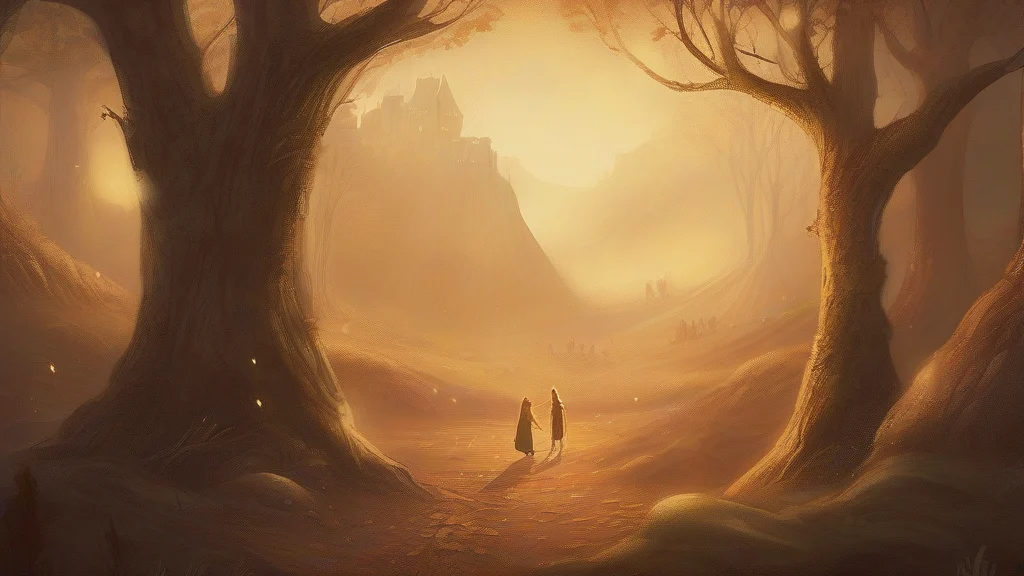
What does elfland mean?
Elfland is a literary and folkloric term for the mythical realm inhabited by elves — an enchanted otherworld that figures prominently in British and Scandinavian tradition, medieval ballads, and modern fantasy fiction. In works such as the Scottish ballad "Thomas the Rhymer," Elfland is depicted not merely as a place of beauty but as a supernatural territory with its own queen, customs, and perils, where time flows differently and mortals who enter risk being trapped forever. The word is typically capitalized when referring to this specific legendary realm, though it may appear lowercase in generic fantasy usage. Writers and readers value "elfland" for its evocative power: it conjures a complete imaginative geography in a single word, blending wonder with an undercurrent of danger. While rare in ordinary conversation, it remains a recognized term among enthusiasts of folklore, poetry, and fantasy literature.
nounThe imaginary realm or land inhabited by elves; a magical fairy country of folklore and fantasy literature.
- The mythical land or realm where elves dwell in folklore and fantasy literature.
"In the old ballads, mortal travelers were often lured into Elfland by the sound of elvish music."
"The queen of Elfland appears in numerous medieval ballads as both alluring and perilous."
"The novel's hero crosses over into Elfland through a stone circle on midsummer's eve."
Rarely pluralized; the plural appears only when contrasting distinct elf realms across different traditions or fictional worlds.
"Tolkien's elves inhabit several distinct elflands across Middle-earth's history."
In early Scots ballads like 'Thomas the Rhymer,' Elfland wasn't a whimsical children's destination — it was a dangerous otherworld from which mortals might return centuries later.
Reviewed by Deb Chak, Editor. AI-assisted content curated by RJS Tech Solutions LLP.
Etymology of elfland
Elfland is a straightforward English compound of "elf" plus "land." The element "elf" derives from Old English ælf, cognate with Old Norse álfr and Old High German alb, all tracing back to a Proto-Germanic root referring to supernatural beings. The compound itself became established in English through medieval and early modern balladry, particularly the Scots tradition, where Elfland named the otherworld visited by heroes such as True Thomas. Related derivatives of the same Germanic root include "elfin," "elvish," and, remarkably, "oaf," which descends from an older sense of the elf-word meaning a changeling child.
How elfland is actually used
"Elfland" is a literary and folkloric term rather than everyday vocabulary. It is frequently capitalized when referring to the specific otherworld of ballad tradition, but lowercase "elfland" is also common in general fantasy writing. The word carries connotations of enchantment and beauty, but in older balladry it often suggests danger and time distortion for mortal visitors.
Easily confused with elfland
Fairyland is the realm of fairies in general, while Elfland specifically denotes the domain of elves, though the two are often used interchangeably in folklore.