
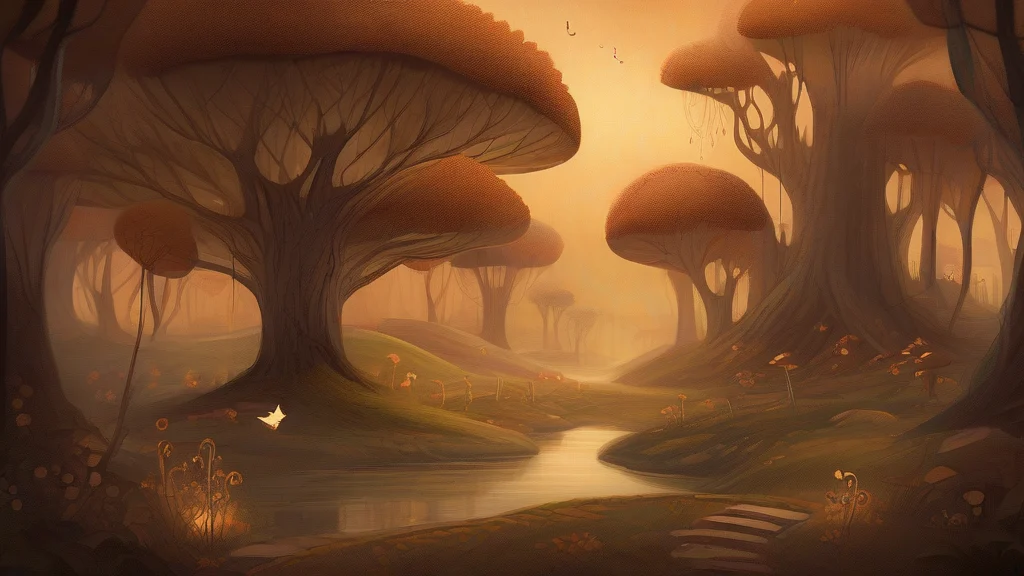
What does fairyland mean?
Fairyland is the imagined realm where fairies are said to dwell, a fixture of European folklore that appears throughout fairy tales, medieval romance, and modern fantasy literature. In this primary sense it denotes an enchanted otherworld — often entered accidentally by mortals, where time flows strangely and beauty conceals peril. The word also has a well-established figurative use: a place, scene, plan, or outlook described as fairyland is one of enchanting loveliness yet detached from reality, as when a critic calls a budget proposal 'economics from fairyland.' This second sense can be affectionate, evoking childlike wonder, or mildly scornful, implying naivety or wishful thinking. Formed from the Middle English 'fairy,' itself rooted in Old French 'faerie' (enchantment), fairyland carries strong literary pedigree, appearing in works from Spenser's Faerie Queene onward. It remains a versatile term wherever writers wish to evoke magic, escapism, or beautiful unreality.
The imaginary realm of fairies in folklore, legend, and fantasy literature.
"Legend held that mortals who wandered into fairyland might return decades later without aging a day."
An enchantingly beautiful but unreal or impractical place, situation, or set of ideas.
"His plans for retiring at thirty seemed like something out of fairyland."
Rarely pluralized; the singular is overwhelmingly standard even when referring to multiple traditions' realms of fairies.
"Different cultures imagined their own fairylands, each with its own rules and dangers."
Shakespeare's audiences didn't just read about fairyland — they feared stepping into it, since entering the fairies' realm could leave you trapped for a hundred years.
Reviewed by Deb Chak, Editor. AI-assisted content curated by RJS Tech Solutions LLP.
Etymology of fairyland
Fairyland combines 'fairy' with 'land' and dates from late Middle English, with the compound well established by the early modern period. The element 'fairy' comes through Old French 'faerie,' meaning enchantment or the realm of enchanted beings, ultimately derived from Latin 'fata,' the Fates. Cognate formations include the older English 'Elfland' and Scots 'Elfame,' which served similar roles in earlier folklore before 'fairyland' became the dominant term.
How fairyland is actually used
The literal folklore sense is common in fairy tales and fantasy literature; the figurative sense often carries a mildly dismissive tone when describing ideas that ignore practical reality. Both senses are standard register.
Easily confused with fairyland
"Fairway" is the mowed strip of ground on a golf course or the channel ships navigate, while "fairyland" is the mythical realm of fairies.