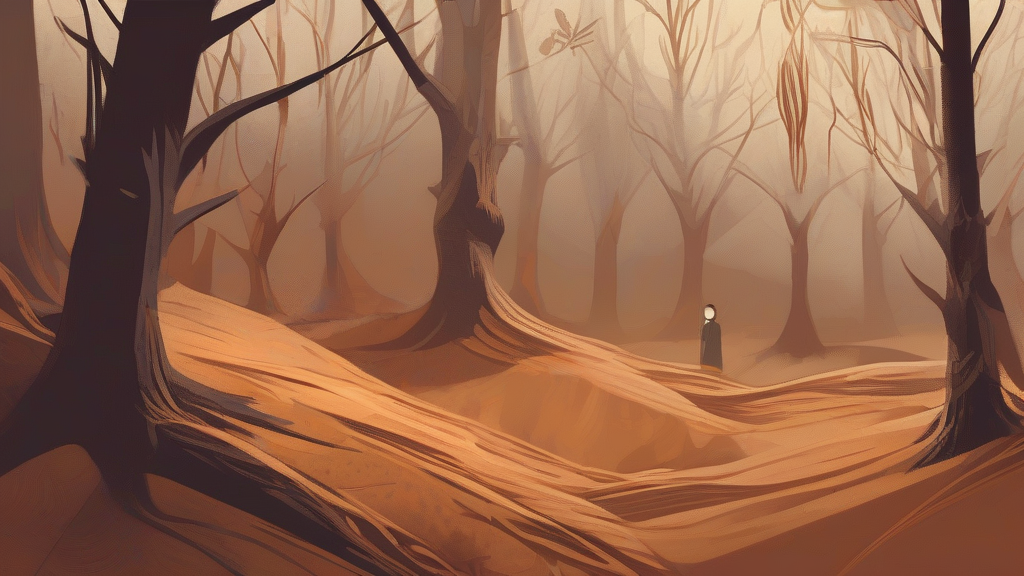
What does embosk mean?
Embosk is an archaic English verb meaning to conceal oneself among bushes or thick foliage — literally, to hide in a bosk, an old word for a small wood or thicket. It can also be used transitively to describe something tucked away amid greenery, as when a fountain is embosked beneath overhanging branches. The word belongs firmly to the literary register: it is best known from Elizabethan poetry, notably Edmund Spenser's The Faerie Quene, where knights and creatures alike embosk themselves in wooded coverts. Today it survives only in deliberately poetic or antiquarian writing, prized for its evocative image of leafy concealment. Readers encountering it should understand it as a colorful, historical alternative to 'hide' or 'lurk', one that paints the hider as nestled within nature rather than merely out of sight.
verbTo conceal or shelter oneself among bushes or thick foliage; to hide in a leafy covert.
- (of a person or animal) to hide or take cover in bushes or dense foliage
- (rare, transitive) to conceal something amid foliage or greenery
"The deer embosked itself in the thicket as the hunters approached."
"Frightened by our approach, the fox embosked in the hedgerow until we had passed."
"The poet described a spring embosked beneath flowering branches, hidden from casual view."
Embosk is the word Spenser reached for when his knights needed to vanish into the woods — hiding in bushes has its very own verb.
Reviewed by Deb Chak, Editor. AI-assisted content curated by RJS Tech Solutions LLP.
Etymology of embosk
Embosk derives from the prefix em- (a form of 'en-', meaning 'in' or 'to cause to be') combined with 'bosk', a Middle English word for a bush or small wood, ultimately of Germanic origin and related to 'bush'. The verb arose in the sixteenth century, when it was favored by poets such as Spenser for describing concealment in woodland settings. Its closest relatives are the nouns 'bosk' and the adjective 'bosky', meaning woody or covered with bushes.
How embosk is actually used
Embosk is archaic and literary, found chiefly in Renaissance poetry such as Edmund Spenser's The Faerie Quene and in antiquarian prose. Modern writers use it for deliberate archaic or poetic effect; it would sound affected in ordinary conversation.
Easily confused with embosk
Emboss means to raise a design on a surface in relief, while embosk means to hide among bushes or greenery.