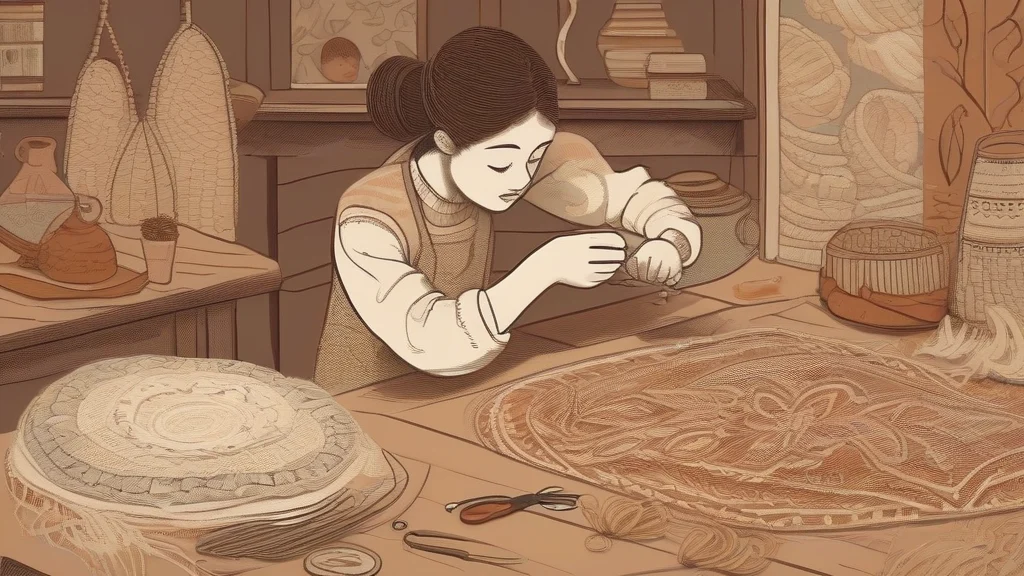
What does embroidering mean?
Embroidering is the present participle and verbal noun of "embroider," meaning to decorate cloth with patterns stitched in thread or yarn. It describes the ongoing activity of needlework — embroidering a monogram onto linen, embroidering flowers along a hem — and evokes patience, craftsmanship, and traditional domestic art. The word also has a well-established figurative sense: just as a needleworker adds ornamental stitches to plain fabric, a storyteller may "embroider" an account by weaving in invented or exaggerated details. This figurative use typically carries a slightly critical tone, suggesting colourful embellishment that falls short of outright fabrication. In everyday English, embroidering appears most naturally in contexts of textiles, crafts, and heritage skills, while the extended sense enlivens discussions of memoirs, testimony, and tall tales alike.
Present participle of "embroider": decorating fabric with ornamental stitching, or figuratively adding invented detail to a story.
"They watched her embroidering the banner for the festival."
Used with auxiliary verbs for progressive tenses (is/was embroidering) and as a modifier in phrases like "embroidering hands."
The action or process of decorating fabric with needlework, or of elaborating an account with invented details.
"Hours of quiet embroidering produced the altar cloth."
As a gerund, it names the activity rather than the finished product; use "embroidery" for the product or the craft as a whole.
Very rare; the plural appears only when referring to multiple instances or specimens of embroidered work, and "embroideries" is strongly preferred in modern usage.
"The museum's drawers held delicate embroiderings from several centuries."
When you 'embroider' a story, you're borrowing a metaphor straight from the sewing basket — threading fictional flourishes into plain fact like so many decorative stitches.
Reviewed by Deb Chak, Editor. AI-assisted content curated by RJS Tech Solutions LLP.
Etymology of embroidering
Embroidering derives from the verb "embroider," which entered Middle English from Anglo-Norman and Old French forms such as "embroder" or "enbrouder." The French verb "broder," meaning to stitch ornamentally, is generally traced to a Germanic source. The prefix "em-/en-" carries the sense of putting something into or upon something else, giving the literal idea of working decoration into cloth. The noun "embroidery" and the agent noun "embroiderer" developed alongside the verb, and the now-rare form "broider" preserves the older root without the prefix.
Related word forms
How embroidering is actually used
As the -ing form of a verb, it functions as both a progressive verb form and a gerund/noun. The literal sense is neutral in register; the figurative sense often carries a mildly disapproving connotation, implying that someone has stretched the truth without outright lying.
Easily confused with embroidering
Embroidery refers to the craft itself or the finished decorated work, while embroidering is the ongoing act or process of doing it.
Embellishing is general decoration or improvement, whereas embroidering specifically involves needlework on fabric or, figuratively, inventing details in an account.