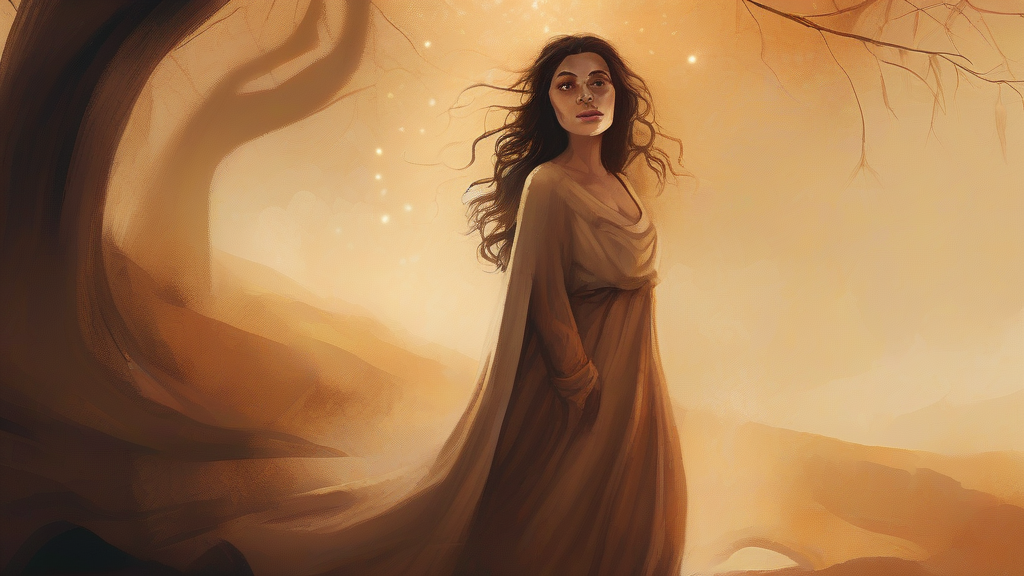
What does enchantress mean?
An enchantress is a woman who practices magic, particularly in folklore, myth, and fantasy literature, where she is typically depicted as both powerful and alluring — think of figures like Circe in Homer's Odyssey or Morgan le Fay in Arthurian legend. Beyond its literal magical sense, the word is used figuratively to describe a woman whose charm, beauty, or presence exerts a captivating hold over others, as if by spellcraft. The term derives from the verb 'enchant', which itself comes from the Latin 'incantare', meaning 'to chant upon' — reflecting the ancient belief that magic operated through spoken incantations. Enchantress is a literary word with a distinctly romantic and slightly archaic tone; it rarely appears in casual conversation but flourishes in storytelling, historical fiction, and poetic description. Because it applies only to women, its masculine counterpart is enchanter, though that term is far less common in figurative use.
A woman who uses magic or sorcery, especially one portrayed in folklore or fantasy as seductive and bewitching.
"The knight was warned never to accept a gift from the enchantress who dwelt in the forest."
Feminine-only form; the masculine equivalent is enchanter.
A woman of irresistible charm or fascination; one who captivates others as if by magic.
"To her admirers she was less a singer than an enchantress, weaving her audience under her spell."
Figurative and literary; may sound dated or overly romantic in modern speech.
Standard plural formed by adding -es to the singular.
"Medieval romances are full of enchantresses who test the virtue of wandering heroes."
The word traces back through French 'enchanter' to the Latin 'incantare' — literally 'to chant against', because magic was once believed to work through sung spells.
Reviewed by Deb Chak, Editor. AI-assisted content curated by RJS Tech Solutions LLP.
Etymology of enchantress
Enchantress was formed in English from the verb 'enchant' plus the feminine suffix '-ess', with the word appearing from around the late sixteenth century. The verb 'enchant' came into Middle English from Old French 'enchanter', which derived from the Latin 'incantare', meaning 'to chant or bewitch'. This Latin root combines 'in-' ('upon') with 'cantare' ('to sing'), a frequentative form of 'canere'. Cognates sharing this root include 'enchantment', 'incantation', and 'chant', all preserving the ancient association between magic and song.
How enchantress is actually used
The word is literary and somewhat archaic in flavor; it appears most often in fairy tales, fantasy fiction, and elevated prose. The figurative sense carries a romanticized connotation and can sound dated or melodramatic in everyday speech. It is exclusively feminine.
Easily confused with enchantress
An enchanter is the male counterpart — a man who casts spells or charms — while an enchantress is always a woman.