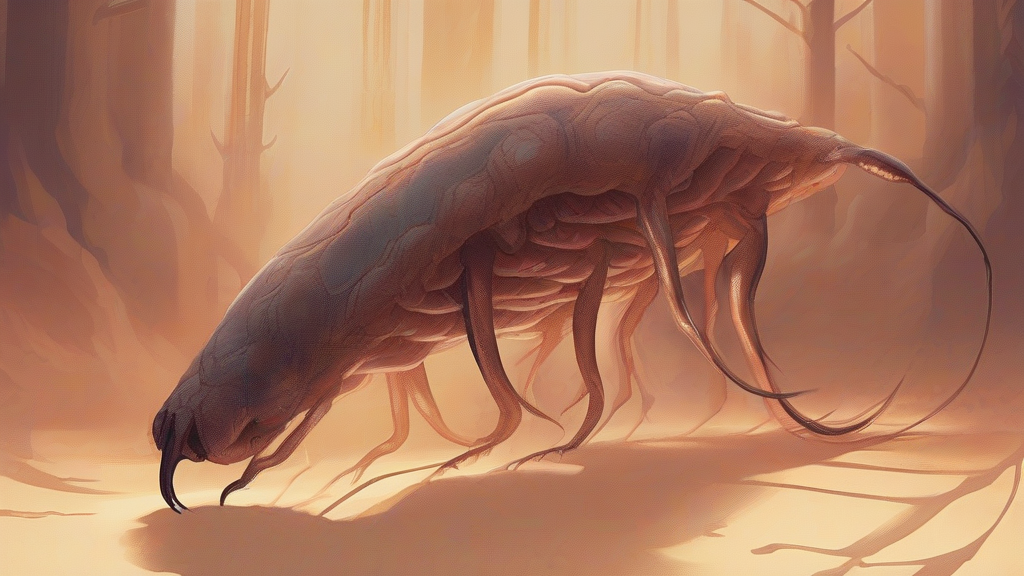
What does endozoon mean?
Endozoon refers to an animal that lives within the body of another organism, most often as a parasite such as a tapeworm, roundworm, or fluke. The word derives from the Greek prefix endo-, meaning 'within', combined with zōion, meaning 'animal' — the same root that gives us zoology. Its natural counterpart is ectozoon, which denotes an animal that lives on the exterior of its host, like a tick or louse. Endozoon belongs to formal, scientific register and appears mainly in older zoological texts and taxonomic discussions; contemporary biologists tend to prefer the more specific term endoparasite. The standard plural is endozoa, following classical convention. Though uncommon in everyday speech, the word neatly captures a relationship central to medicine and ecology — the intimate, often harmful cohabitation of one creature inside another — and remains useful wherever precision about location distinguishes internal dwellers from their surface-dwelling relatives.
nounAn animal that lives within the body of another organism, typically as a parasite or commensal; in broader biological usage, any animal inhabiting the interior of another animal.
- An animal that lives parasitically or commensally inside the body of another organism.
"The tapeworm is a classic endozoon, dwelling unseen within its host's intestine."
"The physician explained that the patient's symptoms were caused by an endozoon lodged in the digestive tract."
"In his comparative anatomy lectures, he distinguished each ectozoon from the endozoon by its mode of attachment to the host."
Follows the Greek/Latinate plural pattern shared with words like protozoa; 'endozoons' is nonstandard.
"The specimen revealed several endozoa embedded in the intestinal wall."
From tapeworms to botfly larvae, biologists needed one word for 'the animal hiding inside you' — and Greek gave them endozoon.
Reviewed by Deb Chak, Editor. AI-assisted content curated by RJS Tech Solutions LLP.
Etymology of endozoon
Endozoon combines the Greek prefix endo- ('within') with zōion ('animal'), a root shared with zoology, protozoan, and even zodiac. The term was coined in nineteenth-century zoology alongside its opposite, ectozoon, to classify organisms by whether they inhabit a host's interior or exterior. Its plural, endozoa, follows the Greek-style declension typical of learned coinages of that era.
How endozoon is actually used
Endozoon is a technical term confined chiefly to older or specialized zoological writing; modern biology more often uses terms like endoparasite or internal parasite. It takes Latinate pluralization (endozoa) and is rarely encountered outside scientific literature.
Easily confused with endozoon
An ectozoon lives on the outer surface of its host (like a louse on skin), whereas an endozoon lives inside the host's body.
A protozoon is a single-celled microscopic organism, while an endozoon may be any animal living internally within another, regardless of complexity.