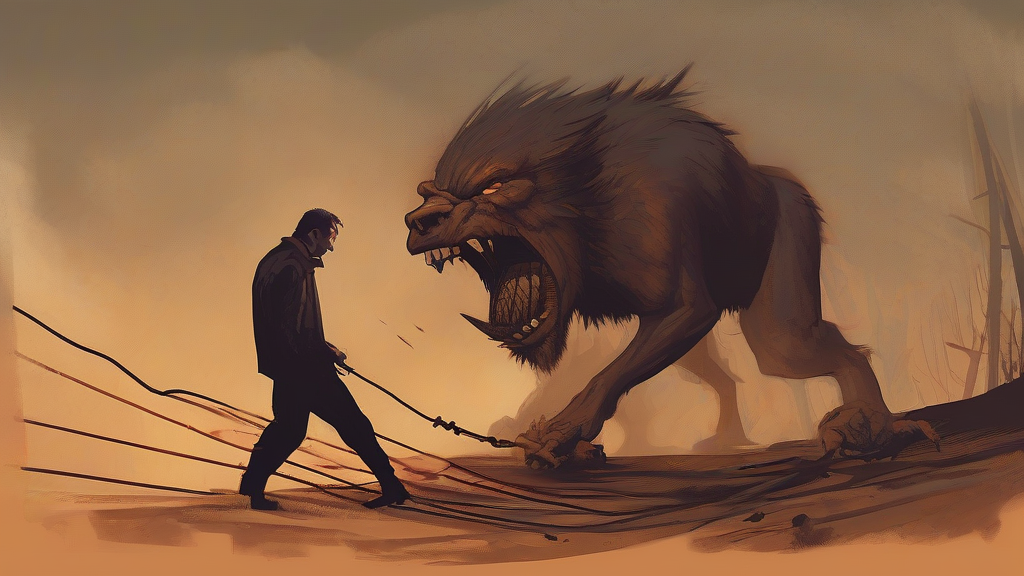
What does ensnarling mean?
Ensnarling is the present participle and gerund of the verb ensnarl, meaning to catch or tangle something in knots, snares, or obstructive masses, or figuratively to draw someone into a complicated situation that is hard to escape. Its literal uses typically involve rope, wire, hair, fishing nets, or vegetation becoming twisted and knotted, while its figurative uses appear often in political, legal, and business contexts, where red tape, scandal, or conflict can be said to be ensnarling individuals or institutions. The word carries connotations of disorder, frustration, and entrapment, and it sits somewhere between the more general entangling and the more predatory ensnaring in tone. Though the base verb ensnarl is comparatively rare in modern usage, its participial form persists as an expressive choice for writers who want to evoke the image of a knot tightening rather than a trap snapping shut. It is standard in both British and American English.
Present participle of ensnarl: to catch or tangle in snares, knots, or obstructions; to involve in a complicated or difficult predicament.
"Vines were ensnarling the garden fence within a single growing season."
Often used figuratively in formal writing about bureaucracy, debt, or legal complications.
The act or process of ensnaring or tangling something in knots or complications.
"The slow ensnarling of the negotiations left both sides exhausted."
Less common than the verbal use; mostly found in descriptive or literary prose.
Though 'ensnarl' never became as common as its cousin 'ensnare,' its present participle survives as one of English's most vivid ways to describe a hopeless tangle — literal or figurative.
Reviewed by Deb Chak, Editor. AI-assisted content curated by RJS Tech Solutions LLP.
Etymology of ensnarling
Ensnarling derives from the verb ensnarl, formed in Middle English from the prefix en- ('to cause to be in') combined with snarl, a verb of Germanic origin meaning to tangle or knot. The ultimate origin of snarl itself is uncertain, though it has been linked to Old Norse and related Scandinavian sources. The word developed alongside the more successful ensnare, which comes from a different root (the Old French snaire/snare line), and while ensnare flourished, ensnarl remained a rarer, more concrete alternative emphasizing knots and tangles over traps.
Related word forms
How ensnarling is actually used
Register is neutral to slightly literary; the word appears more often in written than spoken English. It frequently takes a figurative sense in political, legal, and business writing, where processes or scandals are described as ensnarling people or institutions.
Easily confused with ensnarling
Ensnares means catching in a snare or trap, while ensnarling specifically suggests tangling in knots, coils, or a messy obstruction.
Entangling is the more general term for twisting things together, whereas ensnarling carries a stronger image of knots and snares that are difficult to undo.