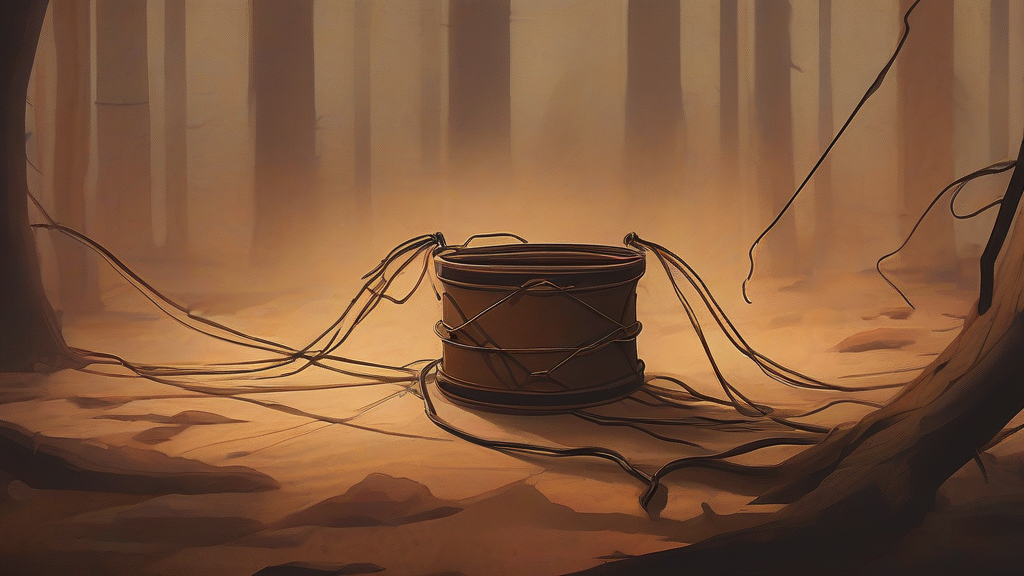
What does ensnarled mean?
"Ensnarled" is the past tense and past participle of the verb "ensnarl," meaning to catch or entangle something — either literally, as when wires, ropes, or hair become twisted together, or figuratively, when a person or project becomes trapped in complications that are hard to escape. A commuter may be ensnarled in traffic, while a company can be ensnarled in litigation or a government agency in red tape. The word derives from "snare," the old term for a trap used to catch animals, so it inherently suggests being caught against one's will. It appears frequently in journalism and formal writing, where it conveys frustration and obstruction more vividly than plain alternatives like "delayed" or "stuck." Its close cousins include "entangled" and "embroiled," though "ensnarled" uniquely evokes the image of knots tightening around its subject.
Caught or tangled in something, whether physically twisted in material or figuratively trapped in complications.
"The fishing lines ensnarled around the propeller."
Often used passively: "was/were ensnarled in."
In a state of being entangled or involved in complicated difficulties.
"An ensnarled process delayed the permit for months."
The word literally means 'in a snare' — the same trap hunters once set for animals — which is exactly why we say people get ensnarled in bureaucracy they can't escape.
Reviewed by Deb Chak, Editor. AI-assisted content curated by RJS Tech Solutions LLP.
Etymology of ensnarled
"Ensnarled" comes from the verb "ensnarl," formed in English from the prefix "en-" (meaning to cause to be in) combined with "snarl," meaning to tangle or knot. The root ultimately traces to "snare," a device for trapping animals, giving the word a long association with being caught or trapped. It developed in English usage alongside related formations such as "ensnare" and "entangle," all expressing the idea of being caught in something difficult to escape.
Related word forms
How ensnarled is actually used
"Ensnarled" carries a connotation of frustrating, often avoidable entrapment and is common in journalistic writing about politics, law, and administration. It is somewhat more formal and literary than "tangled up" or "stuck."
Easily confused with ensnarled
"Gnarled" describes something knotted, twisted, and rough (like an old tree trunk), while "ensnarled" means caught up or entangled in a tangle of literal threads or figurative complications.