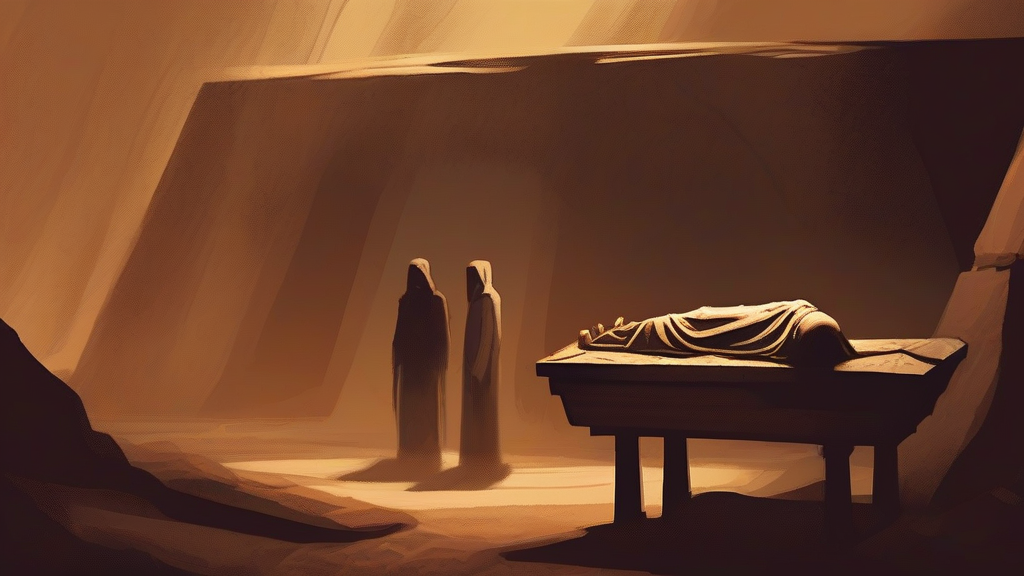
What does entombment mean?
Entombment refers to the act of placing a dead body within a tomb, typically with deliberate care and often accompanied by ceremonial or religious observance. Unlike general terms such as burial or interment, which cover any disposition of a body, entombment specifically implies enclosure in a constructed chamber — whether an ancient sarcophagus, a mausoleum crypt, or a rock-cut sepulchre. The word carries a solemn, formal tone and appears most often in discussions of archaeology, royal and religious funerary practice, and art history, where 'The Entombment' names a long-established subject in Christian painting. It can also be used figuratively to describe a state of being sealed in or trapped, as when workers are entombed by a collapse. Derived from the noun 'tomb,' it remains a precise and evocative term whenever the manner of burial matters.
nounThe act or practice of placing a dead body in a tomb; also, the state of being enclosed or sealed as if within a tomb.
- The burial of a body in a tomb, especially with formal or ceremonial rites.
- The state of being enclosed or trapped as if in a tomb.
"The pharaoh's entombment was accompanied by elaborate funerary rites."
"Archaeologists uncovered evidence suggesting the entombment took place over several days."
"Miners spoke of the entombment of their colleagues beneath the collapsed shaft with quiet grief."
Rarely pluralized; used mainly when referring to multiple distinct burial events, as in archaeological surveys.
"The excavation revealed several entombments spanning three centuries."
The Entombment is one of the oldest subjects in Western art — painters have been depicting Christ's body being laid in the tomb for over 1,500 years.
Reviewed by Deb Chak, Editor. AI-assisted content curated by RJS Tech Solutions LLP.
Etymology of entombment
Entombment derives from the verb 'entomb,' formed in English from the noun 'tomb.' Tomb itself entered English via Old French 'tombe,' from Late Latin 'tumba,' ultimately from Greek 'tymbos,' meaning a burial mound or grave. The word has been in use since at least the early modern period, alongside related forms such as 'interment' and 'sepulture,' all describing the disposal of the dead.
Related word forms
How entombment is actually used
Formal and somber in register; common in archaeology, religious contexts, art history, and disaster reporting. The figurative sense (being sealed or trapped) is less frequent but well attested.
Easily confused with entombment
Internment means imprisonment or confinement of people (often during wartime), while entombment refers specifically to placing a body in a tomb.