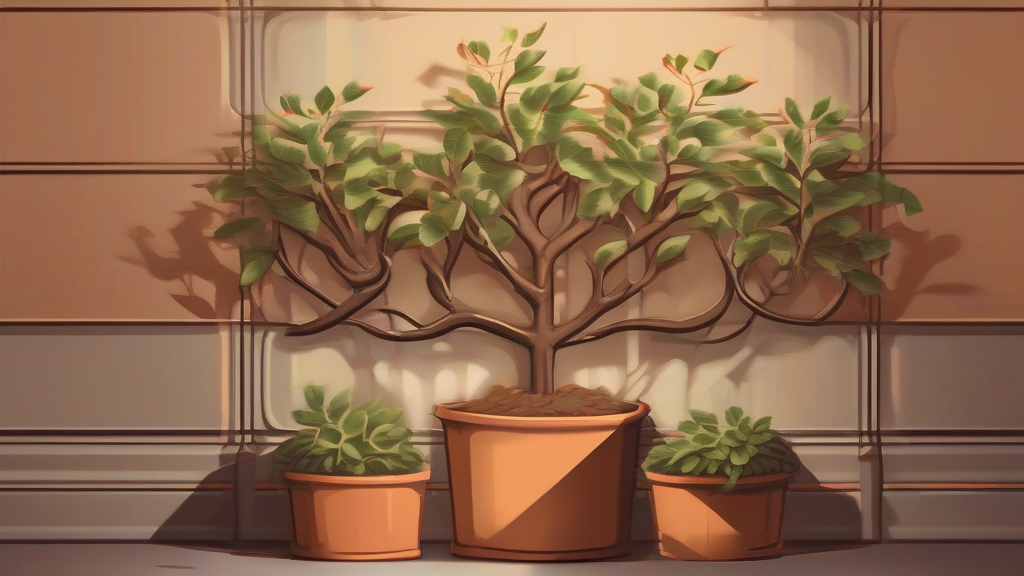
What does espaliering mean?
Espaliering is the horticultural technique of training a tree or shrub to grow flat against a wall, fence, or trellis, usually in a formal, symmetrical pattern such as horizontal tiers or a fan. It is achieved through patient pruning and the tying of branches to their support, and is especially popular for fruit trees such as apples, pears, and figs, which benefit from the warmth and shelter of a sunny wall. The term derives from the French espalier, itself borrowed from Italian spalliera, ultimately connected to a word meaning 'shoulder', evoking the way trained branches lean against their support. Espaliering carries connotations of craftsmanship, order, and old-world garden design, appearing chiefly in gardening manuals and descriptive writing about formal landscapes. It remains valued both for its practical efficiency in small spaces and for its striking ornamental effect.
verbTo train a tree or shrub to grow flat against a wall or trellis in a formal, often symmetrical pattern by pruning and tying its branches.
- (of a tree or gardener) To train branches to grow flat in a formal pattern against a wall or trellis.
"The gardener spent the winter espaliering young pear trees along the sunlit south wall."
"She spent years espaliering the apple tree into a perfect fan against the garden wall."
"Victorian walled gardens were famous for espaliering pears and figs along their brick walls."
The word for this elegant art of flattening trees comes from the Italian word for 'shoulder' — because the branches rest on the wall like a shoulder against a friend.
Reviewed by Deb Chak, Editor. AI-assisted content curated by RJS Tech Solutions LLP.
Etymology of espaliering
Espaliering derives from the French verb espalierer, formed from espalier ('a tree trained against a wall'), which was borrowed from Italian spalliera, meaning a back or shoulder support, from spalla ('shoulder'). The Italian word traces back through Late Latin spatula, which could refer to the shoulder blade. English adopted the noun espalier in the 17th century, with the verb form following later.
Related word forms
How espaliering is actually used
A technical horticultural term, most often encountered in gardening literature and formal writing; rare outside that context.
Easily confused with espaliering
Despite the similar spelling, espionage means spying, while espaliering refers to the horticultural practice of training trees flat against a support.