What does estaminet mean?
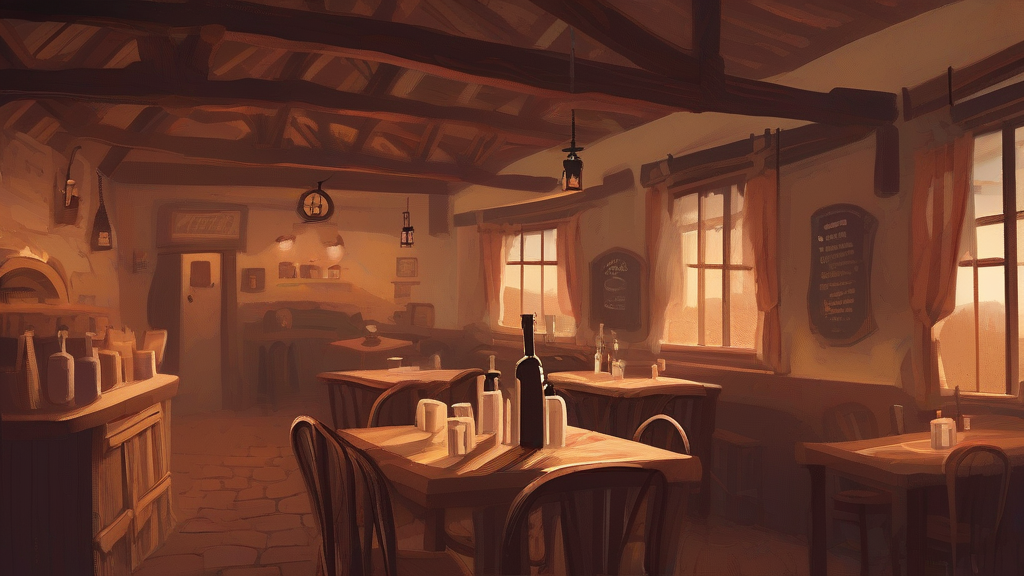
An estaminet is a small, unpretentious café or tavern, the word being borrowed directly from French and applied almost exclusively to such establishments in France and Belgium. Estaminets are typically modest, traditional places serving coffee, beer, wine, and simple food, often associated with the Flanders region of northern France and Belgium, where they function as neighbourhood gathering spots for locals. In English writing, the term appears chiefly in travel literature and journalism, chosen precisely because it evokes something more characterful than a generic 'café' — a candle-lit, wood-beamed interior where regulars play cards and regional dishes are served. The word carries warm connotations of authenticity, conviviality, and old-world charm. For travellers and writers alike, it is a useful and evocative term for the kind of small, storied drinking establishment that larger words like 'restaurant' fail to capture.
nounA small, modest café or coffeehouse, especially one found in France or Belgium, serving drinks and light refreshments.
- A small café or coffeehouse in France or Belgium, typically unpretentious and traditional.
"They whiled away the rainy afternoon in a smoky estaminet off the Grand'Place."
"The old estaminet on the corner has poured beer for Flemish farmers since the eighteenth century."
"Tourists seeking authentic Lille often stumble into an estaminet serving carbonade flamande and chicory coffee."
Regular English plural; the French plural 'estaminets' is identical.
"The town's cobbled streets are lined with estaminets serving local beers."
In Flanders, an estaminet is less a café than a time machine — many still serve beer by candlelight much as they did centuries ago.
Reviewed by Deb Chak, Editor. AI-assisted content curated by RJS Tech Solutions LLP.
Etymology of estaminet
The word comes from French, where 'estaminet' denotes a small café or public house, particularly in northern France and Belgium. Its ultimate origin within French is uncertain, though it emerged in the language by the early nineteenth century and became firmly associated with the Flemish-speaking regions. English adopted it in the nineteenth century as travellers' accounts of the Continent popularised the term.
How estaminet is actually used
A literary and somewhat exotic borrowing from French; in English it almost always refers specifically to such establishments in France or Belgium rather than cafés elsewhere. It carries connotations of rustic charm, local character, and old-world atmosphere.
Easily confused with estaminet
An estaminet is a small café, whereas 'estimable' is an adjective meaning worthy of great respect or admiration.