What does fanion mean?
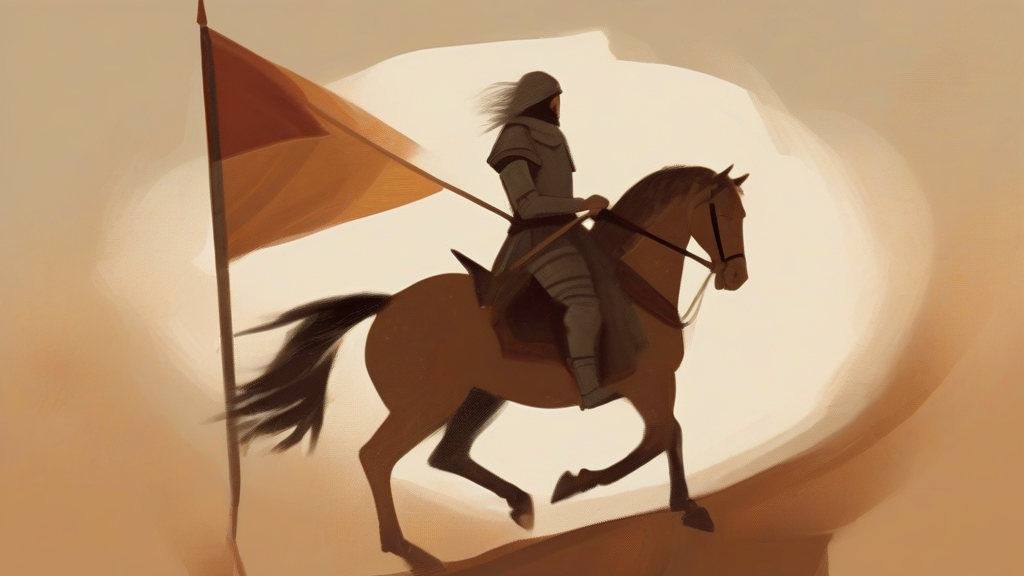
A fanion is a small flag or pennant, historically used to mark positions and directions where something more permanent was impractical. In military use, regiments planted fanions to indicate the location of companies or headquarters on the field, and in surveying, fanions were set out at stations so that observers could sight along a line from a distance. The word comes from French and entered English around the seventeenth century, ultimately related to older terms for banners and hanging cloth such as the gonfalon. Today fanion is a rare word, encountered mainly in accounts of historic campaigns and in older surveying literature, which gives it a distinctly archival character. Though largely superseded by modern markers and electronic positioning, it remains a precise, evocative term for one of the simplest tools of coordination: a scrap of coloured cloth visible across a field, telling people exactly where to gather or where to look.
nounA small flag or pennant, used especially by military units as a marker of position or by surveyors to mark points on a line.
- A small flag carried by military units, planted to mark a position or rally point.
- A small marker flag used in surveying to mark stations or points along a line.
"The sergeant planted a fanion at the edge of the bivouac to mark the company's position."
"Each squad planted its fanion where the column was to halt for the night."
"The survey team set a red fanion at every station along the baseline."
Standard plural; used when referring to multiple marker flags, e.g. those carried by a unit.
"The regiment issued fresh fanions to every company before the march."
Before GPS, entire armies and survey crews were steered by scraps of cloth the size of a napkin — the humble fanion.
Reviewed by Deb Chak, Editor. AI-assisted content curated by RJS Tech Solutions LLP.
Etymology of fanion
Fanion was borrowed from French, where it arose as a diminutive form connected with 'fanon', a word for a piece of hanging cloth or banner. The same family of terms produced 'gonfalon', the name for a princely or civic banner in medieval Italy, and its officer, the gonfalonier. English adopted the word by the early modern period for the small flags used by troops and surveyors.
How fanion is actually used
A rare, chiefly technical term today, found mostly in historical military writing and old surveying manuals; it carries a formal, period flavour rather than everyday currency.
Easily confused with fanion
A bunion is a painful swelling on the foot, whereas a fanion is a small marker flag.
A canyon is a deep gorge, while a fanion is a small flag used as a positional marker.