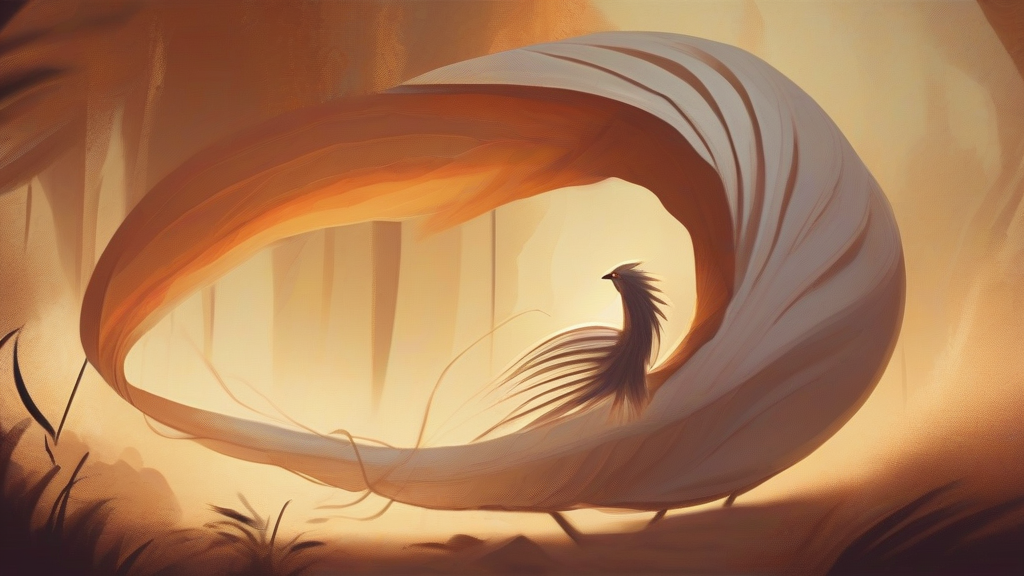
What does fantailed mean?
Fantailed is an adjective describing something that has a tail spreading out like a fan, a term applied most often to birds. It is especially associated with certain breeds of domestic pigeon, whose tail feathers are carried in an upright, semicircular spread, and with birds such as flycatchers known for their broad, fan-like tails. The word can also describe objects whose end widens into a fan shape, though this use is rarer. In tone it is descriptive and slightly picturesque rather than scientific; ornithologists may prefer formal species names, while birdwatchers and hobbyists use "fantailed" freely. The spelling varies between "fantailed" and the hyphenated "fan-tailed," with both forms common in British and American usage. As a compact, vivid modifier, the word conveys elegance and display — a fantailed creature seems almost deliberately showy, which is precisely why the term has endured in descriptions of prized birds.
adjectiveHaving a tail that spreads out like a fan; chiefly used to describe birds, such as pigeons or flycatchers, whose broad tail is carried open in a fan shape.
- Describing a bird or animal having a tail that spreads like a fan, especially when held erect.
- More generally, describing anything shaped or spread out like a fan at one end.
"The fantailed pigeon strutted across the show cage, its feathers spread in a perfect semicircle."
"A fantailed flycatcher flitted through the garden, its long plumes trailing behind it."
"The kite's fantailed design kept it steady in the gusting wind."
A fantailed pigeon can't sing or talk, yet for centuries it has won hearts — and prizes — simply by showing off its tail like a peacock's fan.
Reviewed by Deb Chak, Editor. AI-assisted content curated by RJS Tech Solutions LLP.
Etymology of fantailed
Fantailed is an English compound formed from "fan" and "tailed." Both elements are of Old English origin: "fan" derives from Old English "fann" (ultimately from Latin "vannus," a winnowing basket), while "tail" comes from Old English "tægel." The compound arose naturally in English descriptions of birds, particularly fancy pigeons, whose distinctive spread tails made the description self-evident. Related formations include the standalone noun "fantail," which names such birds directly.
How fantailed is actually used
"Fantailed" is a descriptive rather than technical term, most often found in ornithological and pigeon-fancying contexts; it frequently appears hyphenated as "fan-tailed," and both spellings are widely accepted.
Easily confused with fantailed
"Fantail" is a noun naming the bird or the fan-shaped tail itself, while "fantailed" is an adjective describing something that possesses such a tail.