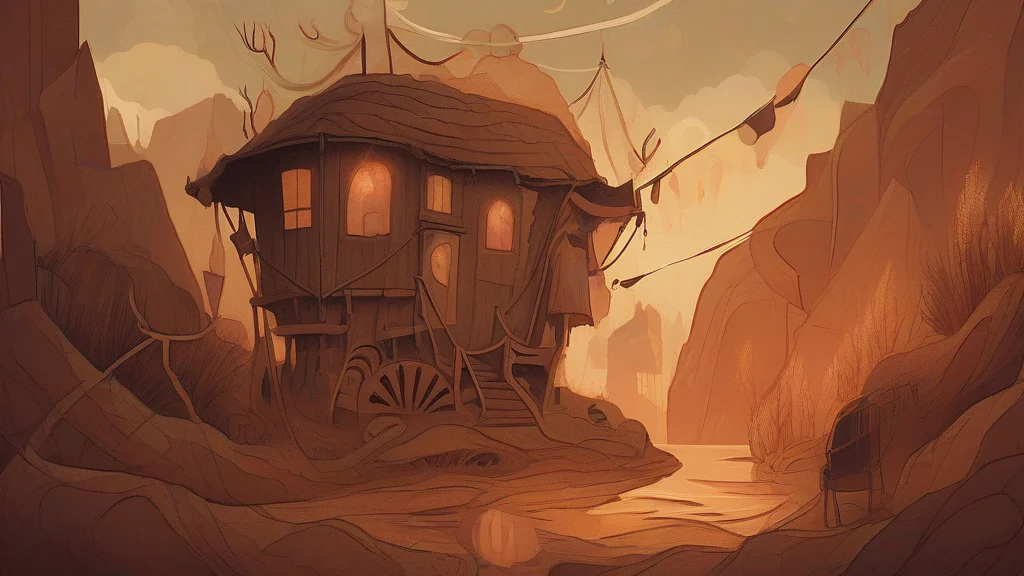
What does fantastical mean?
Fantastical is an adjective describing things conjured by the imagination rather than observed in reality — beings, places, or scenes marked by extravagance, strangeness, or dreamlike invention. It applies naturally to literature, art, film, and architecture: a fantastical tale may feature dragons and enchanted forests, while a fantastical building might twist into shapes no practical structure could take. The word carries a distinctly artistic and literary flavor, and unlike "fantastic" — which in modern usage most often means excellent or superb — "fantastical" describes a quality of unreality rather than offering praise. Its roots lie in the same family as "fantastic" and "fantasy," all tracing back through Latin and Greek terms for appearance or imagination. Useful whenever a writer needs to signal that something belongs to the realm of invented, impossible, or dreamlike worlds, "fantastical" remains a precise and evocative term for describing the products of unfettered imagination.
adjectiveHaving a quality of imaginative strangeness or unreality; existing only in the imagination and often wildly elaborate or grotesque in character.
- Conjured up by unrestrained imagination; existing only in fancy and often strange, extravagant, or grotesque.
- Resembling something out of fantasy or dream; having an otherworldly or unreal quality.
"The palace's ceilings were painted with fantastical beasts that seemed to writhe overhead."
"The novel is populated by fantastical creatures drawn from medieval folklore."
"In his later paintings, the landscapes grew increasingly fantastical, their skies full of impossible light."
"Fantastic" came to mean brilliant; its quieter sibling "fantastical" kept the older sense of belonging to dreams and impossible worlds.
Reviewed by Deb Chak, Editor. AI-assisted content curated by RJS Tech Solutions LLP.
Etymology of fantastical
"Fantastical" derives from "fantastic," which entered English via French from Late Latin "phantasticus," itself borrowed from Greek "phantastikos," meaning capable of forming images or appearances — rooted in "phantazein," to make visible. While "fantastic" drifted toward meaning excellent or remarkable in modern English, "fantastical" largely retained the older sense of imaginative strangeness. Related words sharing this lineage include "fantasy," "fancy," and "phantasm."
Related word forms
How fantastical is actually used
"Fantastical" carries an artistic or literary connotation and is often applied to fiction, art, and architecture; it is more descriptive than evaluative, unlike "fantastic," which typically expresses approval.
Easily confused with fantastical
"Fantastic" usually means excellent or wonderful, while "fantastical" specifically means imaginatively strange or unreal in character.